Marketing to Metro Vancouver's Chinese Community: A Practical Guide
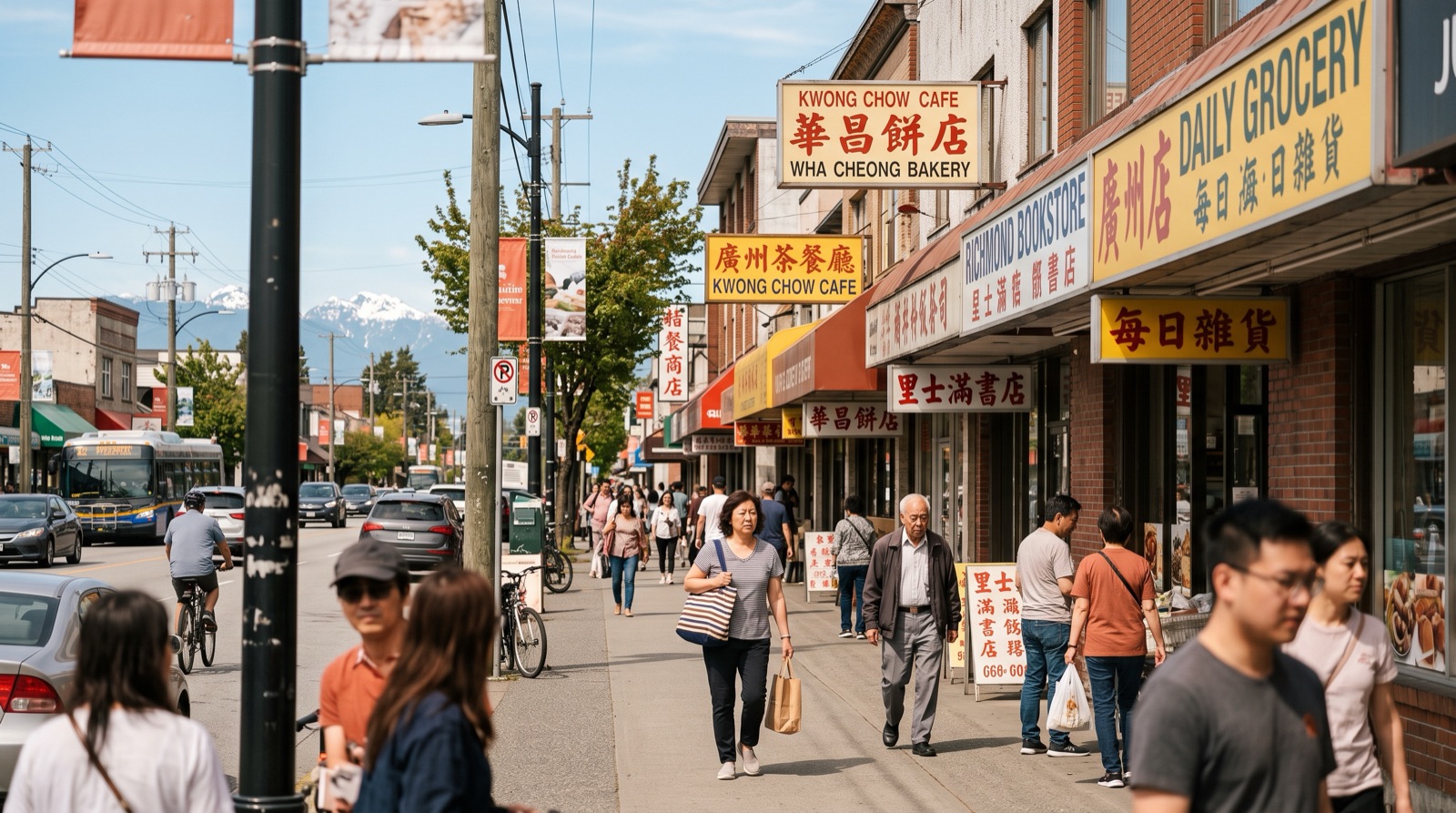
Metro Vancouver is one of the most Chinese-influenced metropolitan markets outside Asia. Census data consistently shows people of Chinese heritage making up roughly one in five residents region-wide — and in Richmond, closer to half. For many local businesses, this isn’t a “niche segment”; it’s a major share of their addressable market.
Yet most Vancouver marketing plans treat the Chinese community as an afterthought: translate the flyer, maybe boost a post around Lunar New Year, done. Here’s what actually works.
First: it’s not one market
The biggest strategic error is treating “the Chinese community” as a single audience. In practice there are at least three distinct segments, and they barely overlap in media habits:
- Recent immigrants and international students. Mandarin-first, digitally native to the Chinese app ecosystem — WeChat for community and commerce, Xiaohongshu (RED) for discovery and reviews, Douyin for entertainment.
- Established immigrants (10+ years). Often bilingual, mixing WeChat groups with Facebook, Instagram, and local Chinese-language media. Hong Kong-heritage households read Traditional Chinese; many mainland-heritage households read Simplified.
- Canadian-born Chinese (CBC). English-first, culturally bilingual, reachable on the same platforms as any local audience — but responsive to brands that show genuine cultural fluency rather than festival-only pandering.
A campaign built for one of these segments will simply not reach the other two.
The platform map
- WeChat — still the backbone for segment 1 and much of segment 2: group chats, Official Accounts, and word-of-mouth referrals. B2C service businesses (real estate, education, health, food) live and die by WeChat reputation.
- Xiaohongshu (RED) — the discovery engine. Restaurant openings, beauty, retail, and experiences get found here first. Reviews read as peer recommendations, which makes seeding authentic content far more effective than ads.
- Instagram / Facebook — the bridge platforms reaching segments 2 and 3, and where bilingual creative earns disproportionate attention because so few brands do it well.
- Local Chinese media & community groups — still surprisingly effective for older demographics and high-trust categories.
What good execution looks like
Language with intent. Choose Simplified vs. Traditional based on the segment, not convenience. Better yet, produce both — the cost is small and the signal of respect is large.
Cultural adaptation, not translation. Lunar New Year is table stakes. Brands that also show up for Mid-Autumn Festival, understand gift-giving norms, use culturally resonant visuals, and reference local community touchpoints (yes, including specific Richmond food courts) read as insiders.
Community credibility before reach. In WeChat and RED ecosystems, trust flows through people: group admins, micro-influencers, satisfied customers who post. Seeding twenty authentic reviews often outperforms one big ad buy.
Measure separately. If your Chinese-market campaign is reported inside overall social metrics, you can’t see what’s working. Track it as its own funnel.
The bilingual advantage
Our team at Kuipra runs campaigns natively in both English and Chinese — not through a translation vendor, but with strategy and creative developed for each audience from the start. That’s also why this journal publishes every article in both languages: it’s the same standard we hold client work to.
If your brand is leaving the Chinese-Canadian market to chance, we should talk — get in touch. For the strategic groundwork that should come first, start with Brand Strategy vs. Marketing Tactics.
Frequently Asked Questions
Which social platforms do Chinese Canadians in Vancouver actually use?
It depends on the segment. Recent immigrants and international students live on WeChat and Xiaohongshu (RED); established immigrants typically mix WeChat with Instagram and Facebook; Canadian-born Chinese are mostly on the same platforms as other local audiences. Effective campaigns usually need at least two of these ecosystems.
Should my ads be in Simplified or Traditional Chinese?
Metro Vancouver has large communities from both mainland China (Simplified) and Hong Kong and Taiwan (Traditional). The safe default depends on your target segment and platform — WeChat and RED skew Simplified, while long-established Hong Kong-heritage communities read Traditional. Bilingual creative, or segment-specific versions, outperforms picking one blindly.
Is translation enough to reach the Chinese market in Vancouver?
No. Direct translation of an English campaign is the most common and most visible failure mode. Effective work adapts the cultural references, festivals, humour, and even the platform format — a WeChat article and an Instagram reel are different media, not the same message in two boxes.
Keep reading


Get in touch