Teardown: How T&T Built Canada's Biggest Asian Grocer by Serving Two Customers at Once
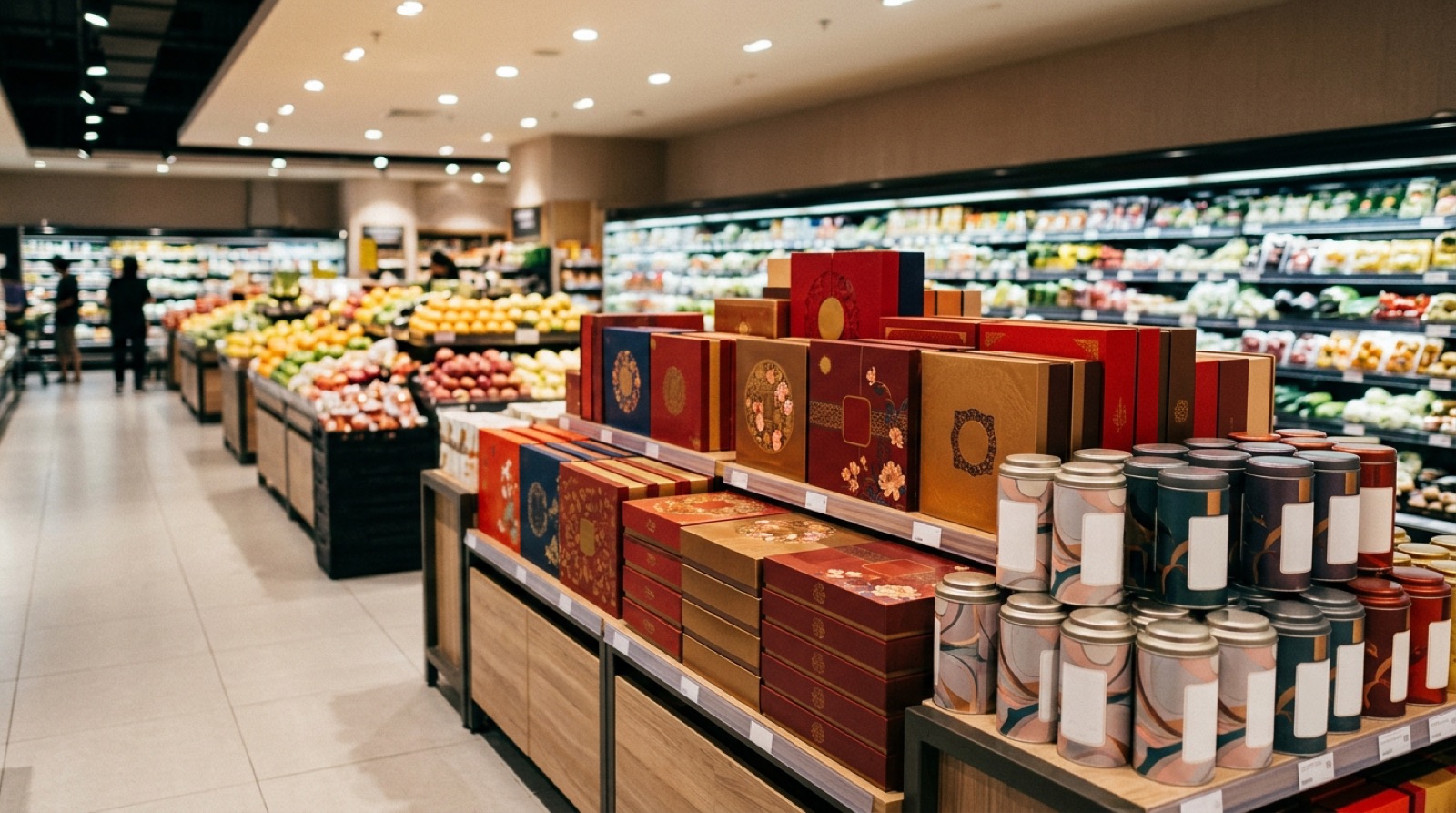
Two weeks before Mid-Autumn Festival, walk into any T&T Supermarket in Metro Vancouver. You are not in a grocery store. You are standing in a seasonal theatre — mooncake gift towers at the door, tea pairings staged beside them, a bakery running overtime, and a checkout line that speaks four languages.
The usual disclosure: T&T is not a Kuipra client. This is an outside teardown of a public brand, built from its stores, public reporting and the company’s own account of its history. We pick Vancouver brands because local businesses learn faster from hometown examples — and this one started about twenty minutes from most of our readers.
The origin is worth stating precisely, because the numbers make the strategy legible. T&T opened its first store in Burnaby in 1993, founded by Jack and Cindy Lee, with Cindy as founding CEO. Loblaw bought the chain in July 2009 for $225 million — $191 million in cash and $34 million in preferred shares. Tina Lee, Cindy’s daughter, took over as CEO in 2014. In April 2026 the company opened its 39th store in North America, and it is now pushing into California after entering the U.S. through Bellevue, Washington in December 2024.
A Burnaby strip mall to a cross-border chain in three decades. Here is what actually did the work.
The name is the strategy
“T&T” means two things simultaneously. Inside the family it is Tina and Tiffany, Cindy Lee’s two daughters. Outside it is Tawa Supermarket Inc. and Tung Yee Uni-President Enterprises Corp., the two founding investors.
Most brands would have picked one story and buried the other. T&T let both live in the same two letters, and never had to choose which audience the name was for. That instinct — refusing to collapse two audiences into one compromise — turns out to be the whole operating system.
Two journeys, not one translated journey
This is the move most bilingual businesses get wrong, and it is worth being blunt about.
Translated signage produces one store with subtitles. The primary customer gets a native experience; the second customer gets a slightly degraded copy of it, and can feel the degradation. It reads as politeness, not welcome.
T&T runs two complete journeys through the same floor plan. The Chinese-speaking shopper arrives with a specific target — a cut of pork, a brand of soy sauce, the right kind of noodle for a dish they are cooking tonight — and the store is organized so that person never has to browse. The non-Chinese shopper arrives curious rather than targeted, and gets a completely different route: hot food, bakery, bubble tea, pre-packaged and legible, no cultural literacy required.
Neither journey is the “real” one with the other bolted on. Both are designed to completion.
This is the same principle we argue in running bilingual social accounts: a second language deserves its own content logic, not a translated feed. T&T just proved it at the scale of a building.
Festivals restructure operations, not just posters
Most retailers treat Lunar New Year and Mid-Autumn as a promotional window: add signage, run a discount, move on.
At T&T the festival calendar drives the store’s physical configuration. Categories expand and contract, floor space gets reassigned, gift merchandising takes the highest-traffic real estate, the bakery shifts production, and staffing follows. The seasonal moment reshapes the operation instead of decorating it.
The lesson scales down further than most owners assume. Your busiest cultural season should change what you do, not just what you post — inventory, hours, staffing, the one thing you get famous for that month. We laid out the local version of this in the Vancouver seasonal marketing calendar: the businesses that win a season decided on it in the previous quarter.
The hot food counter is a customer acquisition channel
Ask a non-Chinese Vancouverite why they first went to T&T. Almost nobody answers “soy sauce.” They answer roast duck, or the food court, or a friend who insisted on the bakery.
The prepared food area functions as a low-commitment entry point. It requires no ingredient knowledge, no recipe, no fear of buying the wrong thing. You spend $12, you have a good time, and the aisles behind you become less intimidating on the next visit.
Every business serving a community it wasn’t originally built for needs one of these doors — a single item, service tier or session that a newcomer can try without needing to understand the whole system first. Most businesses instead ask the newcomer to commit before they understand. That’s the same failure as expecting translated captions to build a Chinese-speaking customer base: you cannot skip the entry step.
Acquisition without brand erasure
In 2009 the obvious risk was that Loblaw would absorb T&T into its own systems and slowly sand the edges off. That is the standard outcome — a specialty brand gets bought, gets “optimized,” and the reason customers loved it quietly disappears.
It didn’t happen here. Cindy Lee stayed on after the sale, Tina Lee succeeded her in 2014, and the chain kept expanding under its own name and its own merchandising logic. The parent supplied scale and capital; the brand kept the decisions that depended on cultural fluency.
That division of labour is the transferable insight. When you partner, franchise or take investment, be explicit about which decisions carry your brand’s actual value. For a business built on community trust, merchandising and language and tone are the product. Those are the ones to protect in writing.
Three moves you can steal at any size
Build the second journey completely. If part of your audience is currently getting a translated version of someone else’s experience, they know. Design their path end to end — different entry point, different proof, different first purchase.
Let your peak season reorganize the business. Pick the one cultural or seasonal moment where you can be genuinely excellent, then move inventory, staffing and hours to serve it. A poster is not a strategy.
Install one low-commitment door. New customers need a way to try you that costs little and requires no fluency in your world. Make it obvious, make it good, and make sure it leads somewhere.
None of this required T&T to be a $225 million company. It required deciding that two audiences both deserved a finished experience — and then paying for that decision in floor space, staffing and operational complexity, every single week.
Frequently Asked Questions
Who owns T&T Supermarket?
Loblaw Companies Limited acquired T&T in July 2009 for $225 million — $191 million in cash plus $34 million in preferred shares. The chain was founded in 1993 by Jack and Cindy Lee, with Cindy as founding CEO, and backed at launch by California's Tawa Supermarket Inc. and Taiwan's Tung Yee Uni-President Enterprises Corp. Cindy's daughter Tina Lee became CEO in 2014 and still leads the company under Loblaw ownership.
What does the "T&T" in T&T Supermarket stand for?
It carries two meanings at once, which is the whole brand in miniature. Internally it references founder Cindy Lee's two daughters, Tina and Tiffany. Externally it nods to the two founding investors, Tawa Supermarket Inc. and Tung Yee Uni-President Enterprises Corp. A family story and an investor story living in the same two letters is a fair preview of how the stores are built.
What can a small business learn from T&T?
Three moves scale down cleanly: build a second complete journey rather than a translated version of the first; let your busiest cultural season restructure operations instead of just adding a promotional poster; and give newcomers one low-commitment entry point — for T&T it's the hot food counter, for you it might be one dish, one service tier or one free consult.
Keep reading



Get in touch