Beauty Salon Marketing in Vancouver: The Booked-Solid Playbook
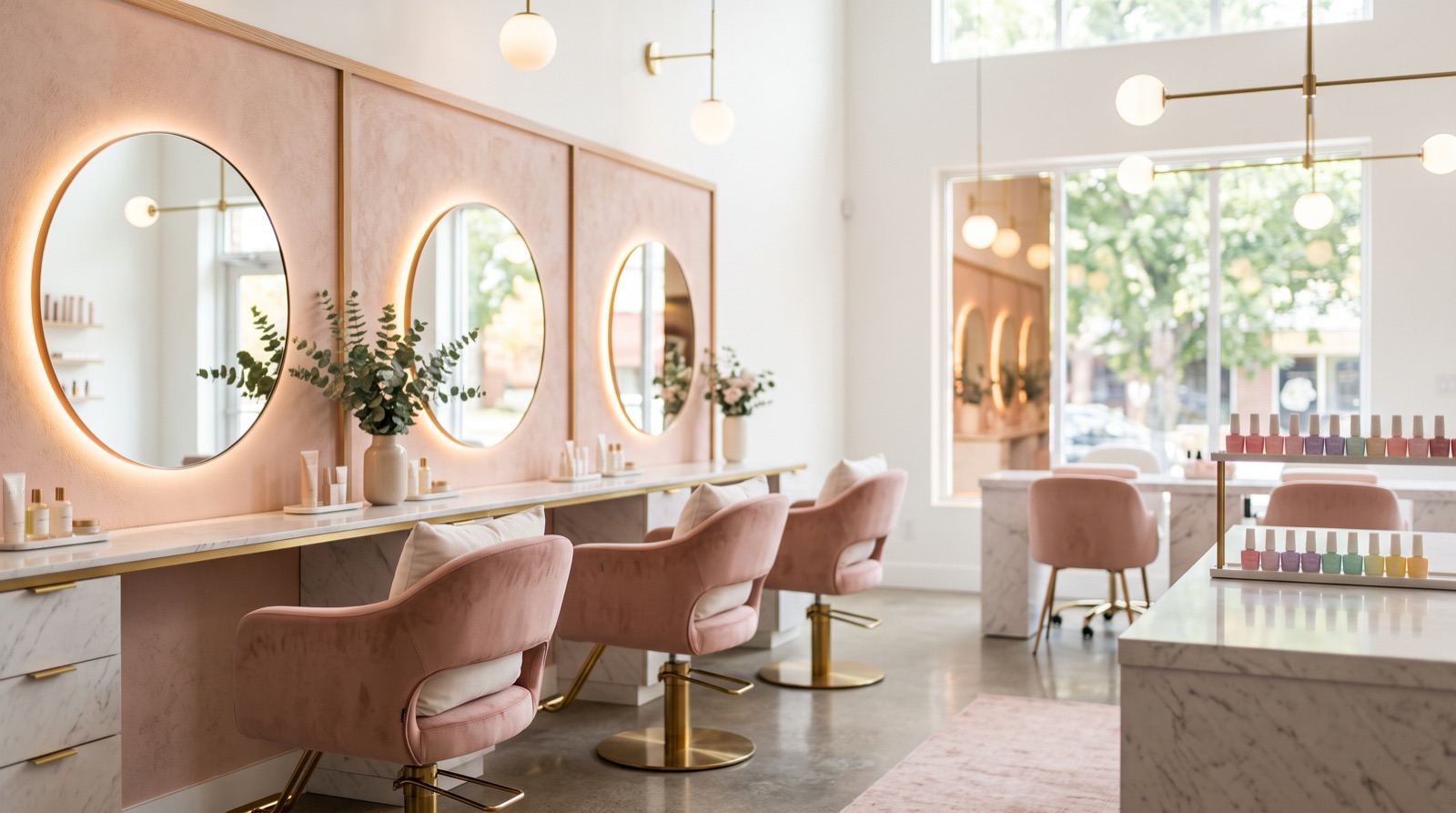
A beauty business has one of the easiest marketing stories to tell — the work is visual, the results are immediate, and happy clients literally wear your portfolio out the door. Yet most Vancouver salons market like it’s 2015: a dusty Instagram, a half-filled Google profile, and a prayer.
Here’s the playbook we’d hand any salon, nail studio, lash artist or barbershop in Metro Vancouver.
Win the “near me” moment first
Beauty searches are overwhelmingly local and time-pressed: “nails near me,” “balayage Richmond,” “mens fade Burnaby.” That’s a Google Maps battle, and it’s won on profile quality, not luck:
- Category precision matters — “Nail salon,” “Hair salon,” “Barber shop” are different rankings. Set the exact primary category, add the secondaries you genuinely serve.
- Photos are the menu. Load real work (not stock), interior shots, and refresh monthly. Beauty is one of the few industries where customers scroll GBP photos like a portfolio before booking.
- Reviews with service names in them. A review that says “best gel-X in Richmond” is ranking fuel for that exact search. Ask happy clients at checkout, QR on the front desk. The full system is in our reviews guide.
- Booking link wired in so a searcher can go from Maps to a booked slot in two taps.
Think in neighbourhoods, not “Vancouver”
Metro Vancouver beauty clients rarely search city-wide — they search where they live and work: “lash extensions Kitsilano,” “nail salon Metrotown,” “balayage Mount Pleasant.” A site that only ever says “Vancouver” is invisible to most of those searches:
- Name your neighbourhood everywhere it counts — in your GBP description, your homepage title (”— Nail Studio in Mount Pleasant”), and naturally inside service pages.
- Anchor yourself to landmarks people actually use. “Two minutes from Metrotown Station” helps clients find you and matches how locals phrase searches and reviews.
- If you genuinely serve several areas, give each its own home — a short neighbourhood section or page each beats cramming ten area names into one sentence, which reads as spam to both customers and Google.
Before-and-after is your entire content strategy
You don’t need content ideas; you produce content with every appointment. What you need is a capture habit:
- Shoot the after, every time. Same corner of the studio, same light (a $40 ring light makes every chair a studio), five seconds per client. Consent first — most clients are flattered.
- Short video beats stills. The transformation reveal, the gel cure, the curl drop — 15 seconds, no talking needed. This is the most under-used free reach in the industry.
- Name your signature services. “The Glass Skin Facial” gets asked for by name and searched by name; “Facial #3” doesn’t. It’s the same named-product mechanic we broke down in our Aritzia teardown.
The Xiaohongshu advantage (Vancouver-specific)
If any of your clientele is Chinese-speaking, Xiaohongshu is the highest-leverage channel you’re probably not on. Beauty is one of XHS’s biggest verticals; users search it like Google before choosing a salon, and Richmond/Vancouver beauty notes routinely outperform what the same effort earns on Instagram. Style notes, nail-art close-ups, honest process shots — authentic beats polished. Our platform comparison and Chinese community marketing guide cover how to run it natively rather than reposting translated captions, and the full Xiaohongshu guide walks through running it yourself versus hiring an agency.
Rebooking is the real revenue engine
New-client marketing is expensive; a beauty business lives on frequency. Nails on a 3-week cycle, hair on 8, lashes on 2-3 — which means your calendar’s future is decided at checkout:
- Book the next visit before they leave. “Want me to hold your spot three weeks out?” converts far better than any reminder text later. Tie your first-visit offer to it.
- Automate reminders at 48 and 24 hours — most no-shows are memory failures, and reminder automation is cheap insurance on every slot.
- Build the list. Phone numbers and emails, collected at booking, used for slow-day offers and product drops. Email and SMS remain the channels you own when the algorithm changes.
Pricing and promos without cheapening the brand
The discount trap hits beauty hard: Groupon-era salons trained a generation of deal-hoppers. Protect price integrity — modest first-visit incentive tied to rebooking, referral credit for regulars, and bundles (mani+pedi, cut+treatment) that raise ticket size. A full book at real prices beats a packed month of one-timers at 40% off.
What to skip
Paid ads before the profile and portfolio are strong (you’d be paying to show people a weak storefront). Chasing TikTok trends unrelated to your craft. And six half-alive platforms — one great visual channel plus a bulletproof Google profile fills more chairs than everything at once.
Run a salon or studio and want this turned into a plan for your specific book? Email info@kuipra.ca — we work with Vancouver beauty businesses in English and Chinese.
Frequently Asked Questions
What is the best marketing channel for a beauty salon?
Two channels carry most beauty businesses: Google Maps for people searching "nails near me" with intent to book this week, and visual social — Instagram and, for Chinese-speaking clients in Vancouver, Xiaohongshu — where before-and-after work sells itself. Everything else is secondary until those two are strong and your rebooking system keeps the clients you already won.
How do beauty salons deal with no-shows?
Layer three defences: automated reminder messages 48 and 24 hours out (most no-shows are forgetfulness, not malice), a card-on-file or small deposit policy for long appointments, and a waitlist so cancelled slots refill instead of dying. Frame the deposit as protecting your artists' time — clients who respect that are the clients you want.
Should a salon discount to attract new clients?
Be careful: deep discounting attracts deal-hunters who churn the moment the price returns to normal, and it quietly tells the market your full price isn't real. Stronger levers are a modest first-visit offer tied to rebooking ("$15 off your second visit, booked before you leave"), referral rewards for existing clients, and packages that raise average spend instead of cutting it.
Keep reading


Get in touch