Food Photos and Video That Fill Tables: A Visual Content Guide for Restaurants
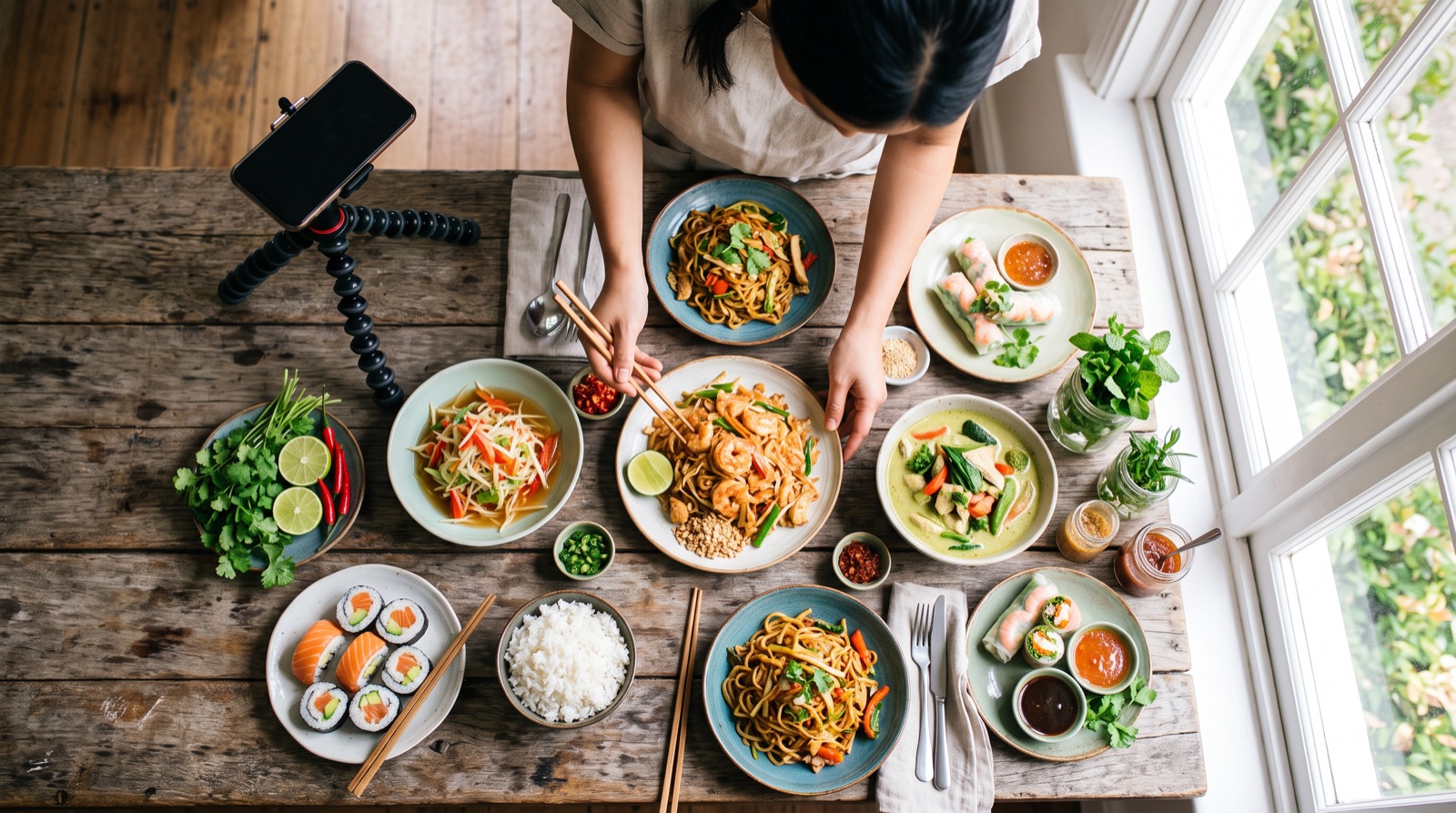
Restaurants are the only businesses whose product is photographed by customers thousands of times a year for free — and most still let a decade-old, orange-lit photo represent them on Google Maps.
We covered the full restaurant marketing system separately. This guide goes deep on the single highest-leverage piece: the visual content itself — what to shoot, how, and where each image works for you.
Where your photos actually sell (ranked)
- Google Business Profile. The most-seen images you own. Diners scroll GBP photos like a menu before deciding — keep 30+ current, appetizing, real shots; refresh monthly; cover dishes, interior, exterior (people check for the vibe and the door).
- Delivery apps. Items with photos outsell items without, on the same menu. If you’re paying 15–30% commission anyway, don’t hand the platform weak images.
- Your own menu and website. Where photo quality justifies price. One caveat: only publish photos the kitchen can actually match — the gap between photo and plate is where trust dies.
- Social feeds. The discovery layer — and where video, not stills, does the heavy lifting.
Phone technique: the 80% that’s free
- Window light, always. Daylight from the side beats every overhead bulb; restaurant lighting is designed for mood, not cameras. Shoot near the window at lunch, or invest $40 in a portable light for evening service.
- Close and closer. Fill the frame. Texture, steam, glaze and sauce sell; empty table around a small plate doesn’t.
- Match angle to dish. Overhead (90°) for bowls, spreads and hot pot; 45° for burgers, stacks and anything with height; straight-on for cross-sections and layers.
- Style in five seconds, not thirty. Wipe the rim, add the garnish, angle the chopsticks — then shoot before the steam is gone. Speed beats fuss; food looks best in its first minute.
Video: the moment beats the dish
The formats that reach non-followers are moments of motion: the pour, the pull, the sizzle, the reveal, the first cut. Fifteen seconds, phone-shot, captions on. This is the restaurant application of the short-form video playbook — with one addition: name the dish on screen. A named signature (“the Volcano Beef Noodle”) is what people search, save and order by name — the named-product mechanic at menu scale.
For Chinese-speaking diners, the same clips become Xiaohongshu video notes — where detailed, honest food close-ups are the platform’s native currency and local competition is still thin.
Build the capture habit (or nothing else matters)
The difference between restaurants with endless content and restaurants with none isn’t equipment — it’s a system:
- A standing shot list: every new dish, every special, one interior refresh per season, one team moment per month.
- A designated corner with good light where plates get a five-second photo stop before service.
- Customer content, recycled. Repost tagged photos (with credit), and make the plate + table + lighting worth tagging — your customers are a volunteer camera crew if the food photographs well from a seat.
What to outsource, honestly
Hire a pro (or a team like ours) for: the core menu shoot, hero images for the website and GBP cover, launch campaigns, and video that needs editing at volume. Keep in-house: daily social, specials, stories, customer reposts. The pro shoot sets the ceiling; the phone habit sets the frequency — you need both, and the budget guide puts numbers on the split.
Want a menu shoot plus a phone-content system your staff can actually run? Visual content is one of our core services: info@kuipra.ca.
Frequently Asked Questions
Do restaurant photos really affect sales?
Directly. Diners scroll Google Maps and delivery-app photos like a menu before choosing, and listings with appetizing, current photos convert measurably more searches into visits. On delivery platforms, items with photos consistently outsell identical items without them. For a restaurant, photography isn't decoration — it's the storefront.
Can restaurants shoot good food photos with just a phone?
Yes, for most everyday content. Three rules do most of the work: shoot beside a window with daylight (never under orange overhead lights), get close enough that the dish fills the frame with steam/texture/sauce visible, and choose the dish's best angle — overhead for spreads and bowls, 45° for burgers and stacked plates. Save professional shoots for the menu, hero dishes and launch campaigns.
What food content works best on social media?
Motion and moment beat still perfection: the cheese pull, the broth pour, the flame, the first cut. Fifteen-second phone videos of real kitchen moments consistently out-reach polished photography on Reels and TikTok — and on Xiaohongshu, honest close-ups with detailed captions are what get saved and searched by Chinese-speaking diners.
Keep reading

Get in touch