Restaurant Marketing in Vancouver: The 2026 Playbook
Vancouver has one of the most competitive restaurant markets in North America — and most of its restaurants market themselves in exactly the wrong order: ads before the basics, followers before regulars, everything before the list.
Here’s the playbook we’d hand any Vancouver restaurant in 2026, in the order that compounds.
Layer 1: Win the map before anything else
Before a new diner sees your Instagram, they see your Google Business Profile — the photos, the rating, the review count, how recently people reviewed, whether the hours look trustworthy. This single free asset outweighs every other channel, and most restaurants leave it half-finished.
The complete foundation: every field filled, current menu (as text and photos, not just a PDF), 30+ real photos with dishes shot in good light, holiday hours updated, and — the part that separates winners — a review system, not review luck: QR code at the table or on the receipt, staff who ask when a guest compliments the food, and a reply to every single review. Our Google Business Profile guide and review management guide cover the mechanics step by step.
One number to internalize: a move from 4.2 to 4.5 stars changes how many people even consider you. Reviews aren’t a vanity metric in food — they’re the product page.
Layer 2: Make the food do the marketing
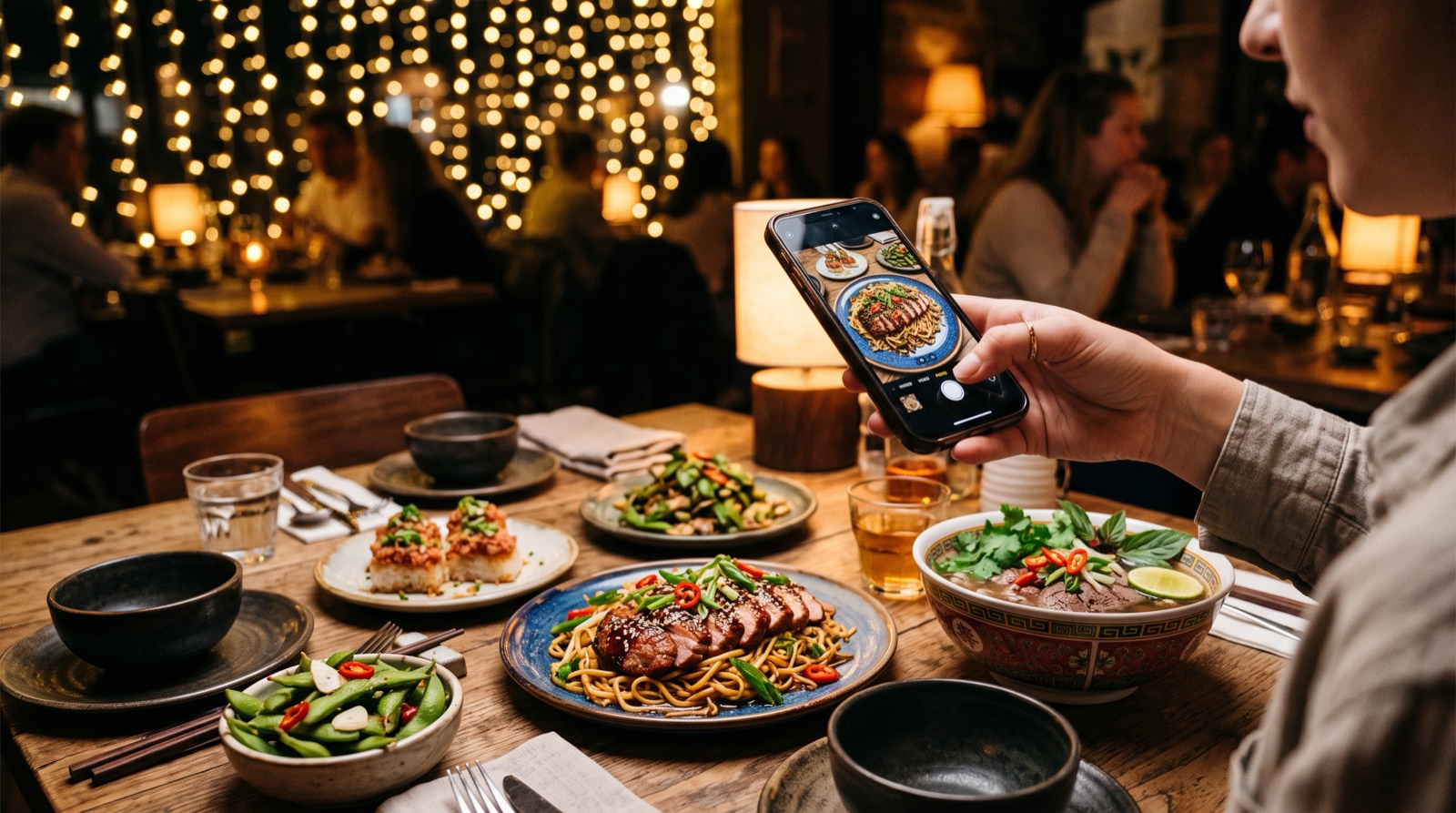
Restaurants have the single greatest content advantage of any business: the product photographs itself, customers want to film it, and every table is a potential production set. The strategy is to engineer that, not hope for it:
- One signature, named and filmable. A dish with a name, a moment (the pour, the flame, the pull-apart) and a reason to point a phone at it. This is the restaurant version of the named-product play we broke down in our Aritzia teardown.
- Short video over static posts. Reels and TikTok reach non-followers; a phone, good light and 20 seconds of the kitchen doing something real beats a studio shoot.
- Let customers be the camera crew. Repost their content (with credit), make the interior and plating repost-worthy, and put the handle where phones already are.
Layer 3: The Chinese-platform advantage
If your food appeals to Chinese-speaking diners at all, Xiaohongshu (RedNote) is Vancouver’s most underpriced restaurant channel — searchable, recommendation-driven, and where a large share of the community actually decides where to eat. It behaves differently from Instagram (search and saves beat follows; authentic notes beat ads), and we wrote a dedicated Xiaohongshu playbook for Vancouver restaurants covering exactly how to work it — plus a broader Xiaohongshu guide if you’re deciding between doing it in-house and hiring an agency.
The broader principle from our Chinese community marketing guide applies here too: a translated caption is not a localized presence. The restaurants that win this audience run the platform natively — right format, right occasions, right dishes forward.
Layer 4: Delivery apps — use them, don’t marry them
The economics are brutal: platform commissions typically run 15–30% per order, which for many restaurants is the entire margin. But the apps also hold real discovery traffic — new customers you’d never otherwise reach.
The sane strategy is asymmetric: acquire on the apps, retain off them. Keep a presence for discovery; then move repeat business direct — a card in the bag with a direct-order discount, pickup incentives, a phone number that answers. Every regular you shift from a 30% channel to a direct one is pure margin recovered.
Layer 5: Own your regulars
Restaurants obsess over new customers while their revenue actually lives in the second, fifth and twentieth visit. The tools are boring and extremely effective:
- A list. Email or SMS, collected at reservation, WiFi login, or with a receipt QR — then actually used: new menu items, holiday pre-orders, slow-night offers. Email remains the highest-ROI channel a local business can own.
- A reason to return. Loyalty stamps, a birthday dish, early access to seasonal menus — simple beats clever.
- The calendar. Vancouver dining runs on moments — Dine Out, Lunar New Year, patio season, holiday parties. Plan them in advance with our seasonal marketing calendar instead of reacting the week before.
What we’d skip
Broad brand-awareness ads before the map is won. Discount platforms that train bargain hunters who never return at full price. And chasing every platform at once — a restaurant with a killer GBP, one strong short-video channel and a working list beats one with six half-dead accounts.
Running a restaurant and want a plan sequenced for your actual capacity? Email info@kuipra.ca — we work with Vancouver restaurants in both English and Chinese-speaking markets.
Frequently Asked Questions
What is the most important marketing channel for a restaurant?
Google Maps, by a wide margin. When someone searches "ramen near me" or checks a restaurant name before booking, your Google Business Profile — its photos, rating, review count and recency — decides whether they come. Most restaurants should fix that foundation completely before spending a dollar on ads.
How much commission do delivery apps take, and are they worth it?
Major platforms typically take roughly 15–30% per order depending on plan and market — often most of a restaurant's margin. They're best treated as a paid discovery channel, not a sales channel: let new customers find you there, then move regulars to direct ordering or pickup with a small incentive, an insert in the bag, or a better direct price.
How do I get more Google reviews for my restaurant?
Ask at the moment of satisfaction, and make it effortless: a QR code on the receipt or table card linking straight to your review form, staff trained to mention it when guests compliment a dish. Never buy reviews or incentivize positive ones — both violate Google's policies and the penalties outweigh the boost. Reply to every review, especially the bad ones; future diners read your responses.
Keep reading


Get in touch