The Vancouver Seasonal Marketing Calendar: Planning a Full Year of Moments
Every January we watch the same thing happen: a local business scrambles to post something for Lunar New Year three days before the holiday, goes quiet until a rushed Mother’s Day promo, then wonders in December why the “seasonal content” never moved the needle.
The problem isn’t effort. It’s that seasonal marketing gets treated as a series of surprises instead of what it actually is — a calendar you can see a year out. Here’s how we build one for Vancouver.
Winter: the year starts before the year starts
Lunar New Year (late January to mid-February, depending on the year) is Metro Vancouver’s biggest cultural marketing moment outside of Christmas. The Chinatown Spring Festival Parade draws tens of thousands, Richmond’s malls run major activations, and gift-giving and dining-out spending spikes across the region. If you serve Metro Vancouver, this belongs on your calendar — and done properly, not as a red-and-gold template. We’ve written a full guide on marketing to Vancouver’s Chinese community if this moment matters to you.
Valentine’s Day works for far more than restaurants and florists — any brand with a gifting or treat-yourself angle can play. Family Day BC (the third Monday of February) is a quieter, distinctly local moment: family-oriented content and long-weekend offers land well precisely because fewer brands bother.
Spring: the most photogenic season Vancouver has
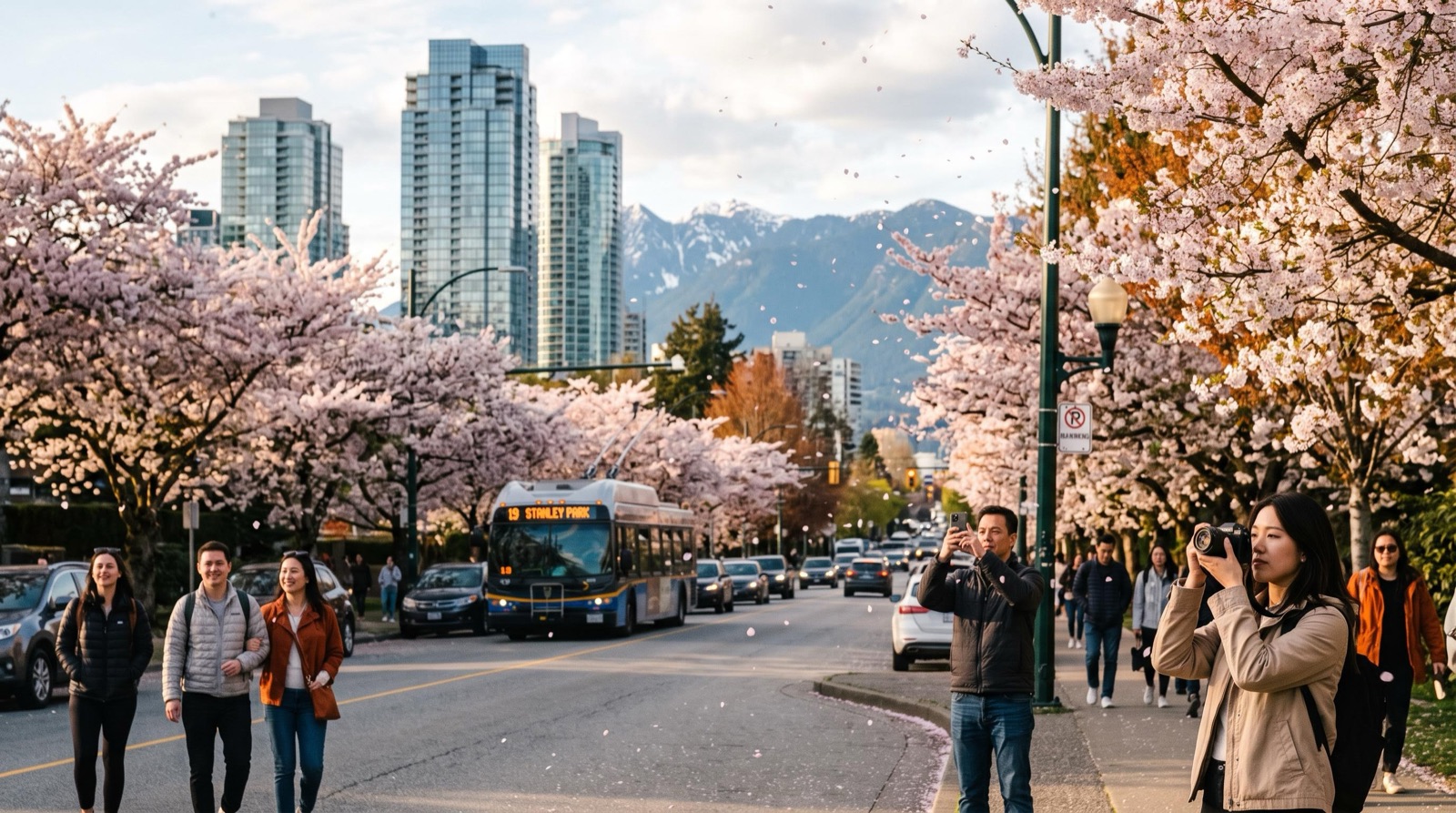
Cherry blossom season (roughly late March through April) is a gift to any brand that shoots content here. The Vancouver Cherry Blossom Festival gives it structure, but the real opportunity is visual: tens of thousands of blooming trees turn the whole city into a set. Book your content shoots for these weeks — the backdrop does half the work.
Vaisakhi in April brings some of the largest parades in North America to Vancouver and Surrey, and it’s a significant community moment for the region’s large Punjabi Sikh population. Mother’s Day in May closes the season as one of the year’s strongest retail and dining occasions.
Summer: the festival gauntlet
Summer compresses a lot into ten weeks: Canada Day, the outdoor festival circuit, the Celebration of Light fireworks drawing huge crowds to English Bay, and the PNE Fair running from late August into Labour Day weekend. The trap here is volume — summer offers so many moments that brands try to touch all of them and end up memorable at none. Pick the one or two that match where your audience actually is, and go deep.
Fall: the commercial engine
Fall is where the calendar gets dense and the stakes get commercial: back-to-school in September, Thanksgiving in October, Halloween, Diwali (typically October or November — a major moment across Metro Vancouver’s South Asian communities), then the Black Friday/Cyber Monday corridor straight into Christmas market season. These moments are competitive precisely because they convert. The brands that win them locked their creative in September, not mid-November.
The multicultural layer isn’t optional
Notice what a Metro Vancouver calendar looks like when you build it honestly: Lunar New Year, Mid-Autumn Festival, Diwali, and Vaisakhi sit alongside the statutory holidays as first-class moments. That’s not a diversity gesture — it’s demographic reality. A calendar that only contains the holidays printed on a bank calendar is marketing to a city that doesn’t exist.
Three rules that make the calendar work
Plan 6-8 weeks back from every moment. Creative, partnerships, and organic build-up all need runway. A moment you start working on the week it happens is a moment you’ve missed.
Choose 6-8 moments, not all of them. Filter every occasion through one question: does our brand have something genuine to say here? Six moments done with real creative beat twenty template posts.
Keep the evergreen base running. Seasonal spikes should sit on top of consistent weekly content, not replace it. Roughly two-thirds evergreen, one-third seasonal keeps you visible between peaks — our guide to building a content calendar covers the system side.
Map the next twelve months once, this month, and January stops being a scramble. If you’d rather have a team that already knows this city’s rhythm build it with you, get in touch.
Frequently Asked Questions
How far in advance should I plan a seasonal marketing campaign?
Work backwards 6-8 weeks from each moment. That window covers creative production, any influencer or partner coordination, and enough runway for organic content to build before the peak. Lunar New Year content that launches the week of the holiday has already missed the planning and gift-buying conversations that happen weeks earlier.
Should my Vancouver business try to show up for every holiday?
No. Pick 6-8 moments a year that genuinely fit your brand and audience, and do them well. A business posting for every single occasion produces thin, forgettable content; one that owns a handful of moments builds anticipation and association year over year.
Which multicultural festivals matter most for Metro Vancouver marketing?
Lunar New Year is the region's biggest non-statutory retail moment, and Mid-Autumn Festival, Diwali, and Vaisakhi each anchor large local communities. Which ones belong on your calendar depends on your audience — but a Metro Vancouver calendar built only on statutory holidays is ignoring a huge share of who actually lives here.
Keep reading
Get in touch