Teardown: A&W Canada Couldn't Outsize McDonald's — So It Changed What the Fight Was About
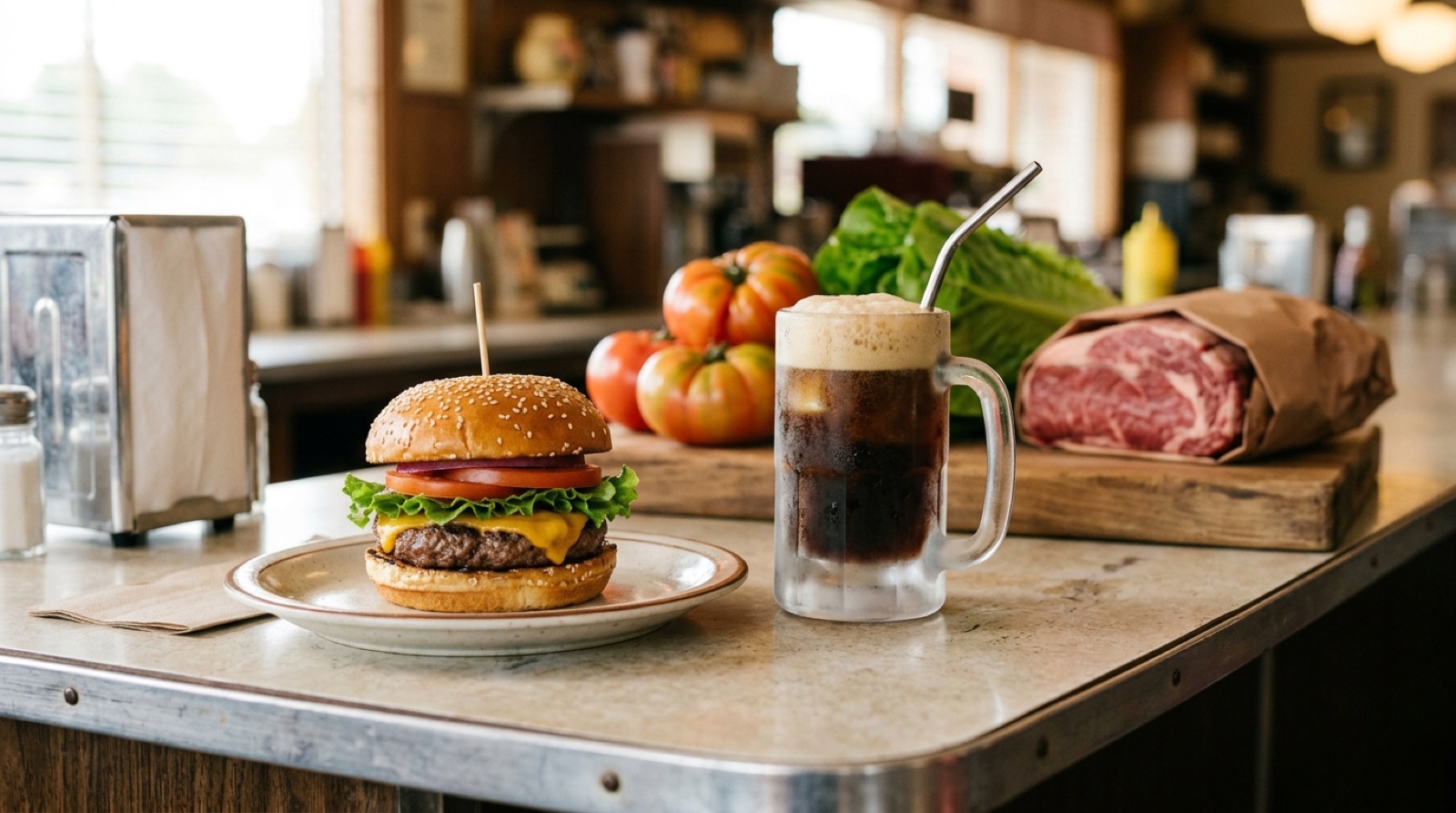
Imagine being the second-largest burger chain in a country where the largest one is McDonald’s.
You will not win on price. You will not win on the number of locations. You will not outspend them on television, out-negotiate them on supply, or out-engineer them on drive-through speed. Every fight on the leader’s terms is a fight you lose slowly.
So A&W Canada stopped having that fight.
The usual disclosure: A&W Canada is not a Kuipra client. This is an outside teardown of a public brand, built from public reporting, trade press and the company’s own announcements.
First, it is not the American A&W
This matters for everything that follows. Unilever acquired A&W’s Canadian operations in 1972, separating them from the US company. In 1995 Canadian management and A&W franchisees bought the chain back from Unilever. In 2002 the A&W Revenue Royalties Income Fund listed on the Toronto Stock Exchange. The company is headquartered in North Vancouver, and with 1,029 franchises as of 2022 it is Canada’s second-largest fast-food hamburger chain.
The Great Root Bear arrived in 1975. The Burger Family — Baby, Mama, Teen and Papa — gave the menu names customers still use. Those named assets are the same compounding mechanism we traced in the Saje teardown, so we will not repeat it here.
The more interesting part is what a Canadian-owned, franchisee-involved company chose to bet on.
Change the axis the leader is strongest on
The challenger’s oldest move is refusing to compete on the dimension where the leader is strongest. We saw it in the Herschel teardown, where a backpack company competed on recognition instead of features in a category whose engineering was already solved.
A&W’s version was ingredients.
In late September 2013, A&W officially launched Better Beef across all 790 Canadian restaurants it had at the time: every burger made with beef raised without added hormones or steroids. It was backed by a national television spot running eight to ten weeks, digital support and a microsite explaining the claim, with creative developed by the agency Rethink.
A market leader with a vastly larger supply chain cannot change the source of its beef quickly or quietly. A smaller chain can. That asymmetry is the point: A&W picked a battleground where its size was an advantage rather than a handicap.
Build the proof before you make the claim
Here is the detail most people skip, and it is the most transferable one in this teardown.
According to trade coverage at launch, the new beef had been introduced into restaurants six to nine months before the campaign went public.
That sequence is the whole discipline. By the time a customer saw the advertisement, the promise was already true in every location they could walk into. Nobody could find a restaurant that had not switched yet. There was no gap between what was said and what was served.
Compare that with the far more common small-business pattern: announce the new service, launch the website page, post about it — and then scramble to deliver it consistently. The first customer who experiences the gap between the claim and the reality becomes the most credible voice about your business, and not in your favour.
It is the same principle we found in the Arc’teryx teardown: credibility built in reality transfers outward into marketing; credibility claimed in marketing does not transfer back into reality.
Say one specific, checkable thing
“Better Beef” is a slogan. What made it work is what sat underneath it: raised without added hormones or steroids.
That is a claim with edges. It can be checked. It is either true or false. It does not ask the customer to trust an adjective like “quality,” “fresh,” or “premium” — words every competitor already uses and that therefore mean nothing.
The same launch coverage cited a QRI International study reporting that 89% of burger eaters were “impressed and interested” that A&W was serving beef raised without added hormones or steroids. Treat that number as the company’s launch research rather than an independent verdict — but it points at why specific claims land. People can repeat them accurately, and repeatable claims spread.
For your business the exercise is identical. Find the one thing you do that is specific and verifiable: a sourcing decision, a guarantee with a number in it, a step you never skip. Replace a paragraph of adjectives with that single sentence. We covered how to anchor it in the positioning statement guide.
The tension inside an ingredient claim
This part is our analysis rather than anything A&W has said.
An ingredient claim is powerful partly because it implies a comparison without naming anyone. If one chain says its beef is raised without added hormones, customers naturally wonder about everyone else’s beef. That is the source of its persuasive force — and also its exposure.
A claim like that invites scrutiny from every direction: competitors, suppliers, industry groups and customers who want to check. It only holds if the company can document it indefinitely, at scale, across every location and every supplier. The day it stops being true is the day the whole positioning turns into a liability.
So the rule for anyone borrowing this move: only make comparative-sounding claims you can prove on your worst day, not your best one.
Two launches, two supply stories
A&W’s later product bets show the same lesson from the other side.
In July 2018 the company launched a Beyond Meat plant-based burger. By August 2018 it ran into a shortage. Demand outran supply within weeks.
That is a success problem, and it is not a criticism — plenty of businesses would take that outcome. But set beside Better Beef it makes the principle unusually clear. When supply was built quietly before the announcement, the claim held everywhere from day one. When demand arrived faster than supply could scale, customers met an empty promise instead.
For a small business the equivalent risks are smaller but identical in shape: a promotion that sells out on day one, a new service your one specialist cannot keep up with, a viral post that brings enquiries you cannot answer for a week. Before you make demand louder, ask whether you can serve the version of success you are hoping for.
Three moves you can steal at any size
Pick the axis where your size helps. If the leader wins on scale, compete on something scale makes slow — sourcing, specialization, speed of change, personal attention.
Build it before you announce it. Make the promise true everywhere a customer could test it, then tell people.
Trade adjectives for one checkable sentence. One verifiable claim you can defend on your worst day beats a page of words every competitor already uses.
A&W Canada did not beat McDonald’s at being McDonald’s. It made a different question matter — and made sure its answer was already true before anyone asked.
Frequently Asked Questions
Is A&W Canada the same company as A&W in the United States?
No. Unilever acquired A&W's Canadian operations in 1972, separating them from the American company. In 1995 Canadian management, together with A&W franchisees, bought the chain from Unilever, and in 2002 the A&W Revenue Royalties Income Fund listed on the Toronto Stock Exchange. A&W Food Services of Canada is headquartered in North Vancouver and, with 1,029 franchises as of 2022, is the country's second-largest fast-food hamburger chain after McDonald's.
What was A&W's Better Beef campaign?
Launched officially in late September 2013 across all 790 Canadian locations at the time, Better Beef meant every burger was made with beef raised without added hormones or steroids. The ingredient had been quietly introduced into restaurants for six to nine months before the announcement. The launch ran a national television spot for eight to ten weeks, supported by digital work and an explanatory microsite; the creative was developed by the agency Rethink.
What can a small business learn from A&W Canada?
If you cannot win on size, change the axis to something the leader cannot copy quickly. Make the claim specific enough to verify rather than a vague "better quality." And build the capability before you announce it — a promise you can only partly deliver damages trust faster than saying nothing at all.
Keep reading
Get in touch