Teardown: Science World Sells Curiosity One True Fact at a Time
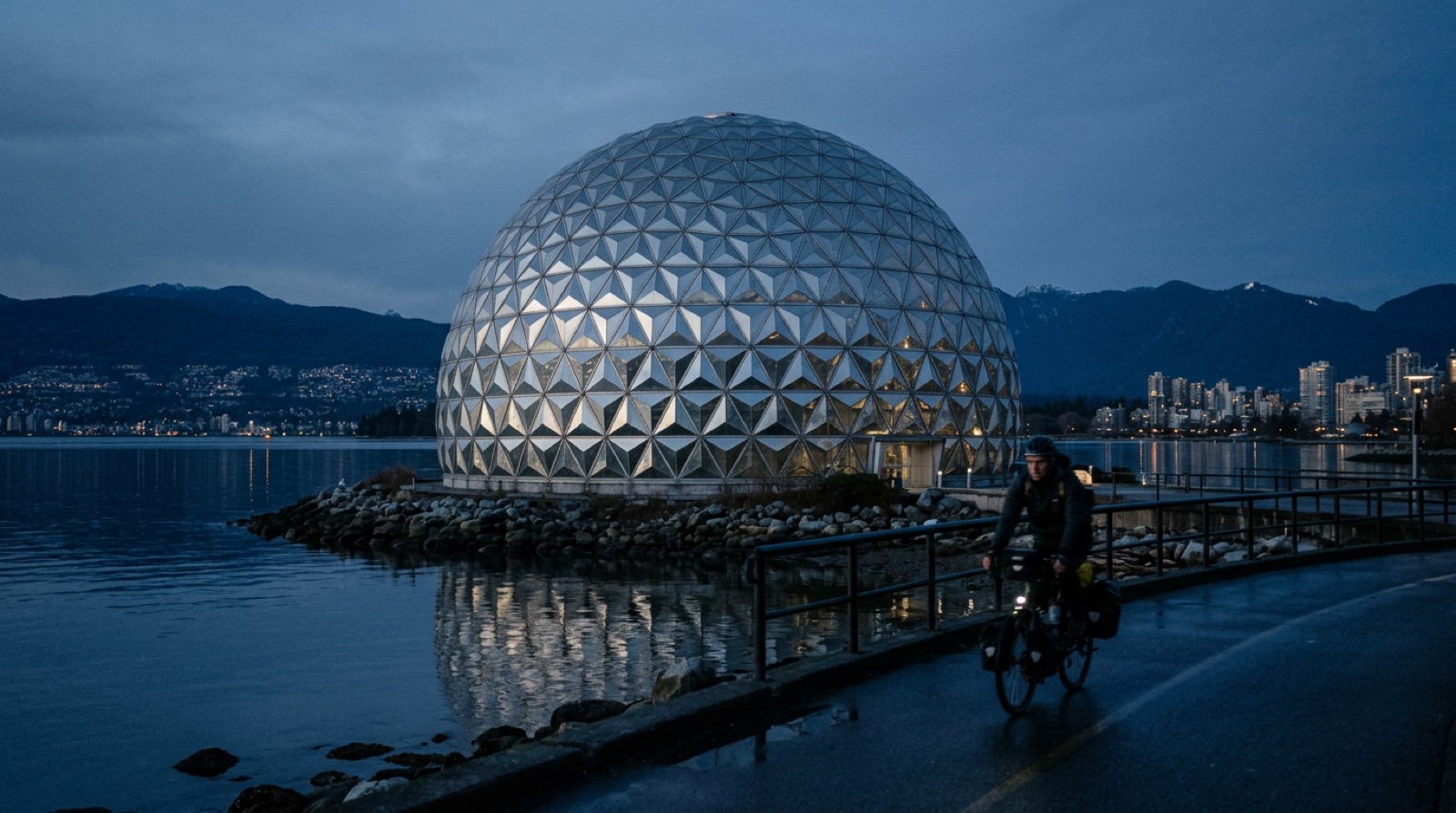
This summer, the dome on False Creek dressed up as a soccer ball.
For the World Cup, Science World wrapped its geodesic dome as the official match ball from May to September 2026, and according to Daily Hive, the centre says more than 100 outlets covered it.
It was a big moment, but the habit behind it is small. For about twenty years, Science World’s advertising has run on a rule most brands ignore: forget the big campaign idea, and give people one true, surprising fact at a time.
The usual disclosure: Science World is not a Kuipra client. This is an outside teardown built from public reporting, Science World’s annual reports and trade-press interviews with the people who made the work.
The facts. The dome was built as the Expo Centre for Expo 86 and opened as Science World on May 6, 1989. It is run by a registered charity. As CEO Tracy Redies told CBC in 2023, the dome was only meant to stand for six months, and because the city owns the land and the province owns the building, the charity cannot borrow against either. In other words, this is an organization that has always had to do a lot with not much. Its advertising reflects that.
The big idea that bombed
Agencies love a “big idea”: one concept, one campaign, rolled out everywhere. Science World’s agency, Rethink, tried that. In a 2016 Strategy interview, creative director Rob Tarry said the first big-idea campaign “totally bombed.”
So they changed the format. Instead of one idea, many small, portable ones, each built around a single little-known science fact, signed off first with “We Can Explain” and later with “Now You Know.”
Tarry gave Strategy the checklist each fact has to pass:
- It has to be true.
- It has to be short.
- It has to make people want to know more.
That is the whole brief. It is cheap to brief, easy to judge and almost impossible to get wrong in a way that hurts the brand.
Put the fact where it is true
The best executions do not just state a fact. They stage it where the reader is standing.
Over the years the work has included a transit shelter that sneezed at people waiting for the bus, a SkyTrain poster built out of real pencils, and scales placed in elevators. For a 2010 treasure exhibit, Rethink made a billboard covered in 22-karat gold leaf, which won Gold at the ADCC awards.
None of these needed a national media budget. Each one is a self-contained piece that works in one place, for the people who happen to be there. In 2007, Media in Canada reported the campaign was being done pro bono, and Science World’s then-CEO said it helped drive attendance.
The transferable part is not the budget; it is the placement logic. A fact about weight lands harder when you are standing on a scale. A fact about germs lands harder when you are standing in a bus shelter. Your message works best at the moment it is true for the reader.
The risk side
Small, surprising facts have a cost: sometimes they are too surprising.
In 2013, two of three print ads for an exhibit about sexuality, including one headlined “Orgasms Can Kill Pain”, were kept off bus shelters. A fact can be true, short and fascinating and still be more than some media owners will run.
If you adopt a fact-led format, decide in advance where your line is, and have a backup execution ready for any placement that might say no.
When a crisis line becomes the brand
In 2020, with the centre closed during the pandemic, Science World and Rethink made a campaign called “The World Needs More Nerds”, built for free, according to Science World’s annual report. A childhood photo of Dr. Bonnie Henry from the campaign went viral, and the work won Gold at Strategy’s 2021 Shopper Innovation Awards.
What happened next is the interesting part. The line did not disappear when the crisis ended. “Nerd” became part of how Science World talks about itself, and its capital campaign is now called The Future is Nerdy, with a $115 million target and more than $75 million raised, according to the campaign page.
Most organizations treat crisis messaging as temporary and drop it as soon as they can. Science World noticed that the crisis line had said something true about who it is, and kept it.
The name people actually use
There is one more lesson here, and it involves money.
In 2005, TELUS paid $9 million for naming rights. The building was briefly called “Telusphere” before becoming “Science World at TELUS World of Science.” The SkyTrain station next door kept “Science World” in its name throughout, and even in 2019 CBC described the centre as “known formally as” the TELUS name, which tells you which name people used day to day.
The naming deal ended in 2020. The back cover of Science World’s 2019/20 annual report reads simply “SCIENCE WORLD”, and TELUS continues as a sponsor of specific programs, such as one that brings scientists into schools.
We do not know the reasons behind the change, and we will not guess. But the pattern is worth noting for any nonprofit or business weighing a sponsorship offer: a sponsor can buy a program, an event or a season with a lot less friction than it can buy the name people already call you. Our guide to local partnerships and sponsorships covers how to structure those deals.
Three moves you can steal at any size
Write down your own three-line checklist. True, short, makes people want to know more works for a dental clinic’s waiting-room posters, a bakery’s chalkboard or a contractor’s Instagram. A clear checklist lets anyone on your team create on-brand content without a big brief. Pair it with a content calendar you can sustain.
Place the message where it is true. Ask where your customer is standing at the moment your message matters, and put it there: the till, the waiting room, the delivery box, the receipt.
Keep the line that worked when things were hard. If something you said during a tough period landed, it probably said something real about you. Do not throw it away when business goes back to normal.
Science World has never had the budget to win by shouting. It wins by being interesting, one fact at a time, which is a strategy available to almost any business.
If you want help turning what you know into content people actually stop for, that is what our content creation service does. Or tell us about your business with the form below.
Frequently Asked Questions
Who makes Science World's ads?
The Vancouver agency Rethink. Science World's taglines have been "We Can Explain" and later "Now You Know," and a 2016 Strategy article described a working relationship of more than a decade. Media in Canada reported in 2007 that the campaign was being done pro bono.
What was "The World Needs More Nerds"?
A 2020 Science World campaign, made for free while the centre was closed during the COVID-19 pandemic. A childhood photo of Dr. Bonnie Henry used in the campaign went viral, and it won Gold in Strategy's 2021 Shopper Innovation Awards. The "nerd" language later carried into Science World's capital campaign, The Future is Nerdy.
Is Science World still called TELUS World of Science?
No. TELUS paid $9 million for naming rights in 2005, and the building was briefly called "Telusphere" before becoming "Science World at TELUS World of Science." The naming deal ended in 2020, and Science World's own materials now use just "Science World." TELUS continues as a sponsor of specific programs.
Keep reading


Get in touch