Teardown: Arc'teryx Built a Luxury Brand by Starting Where Failure Kills You
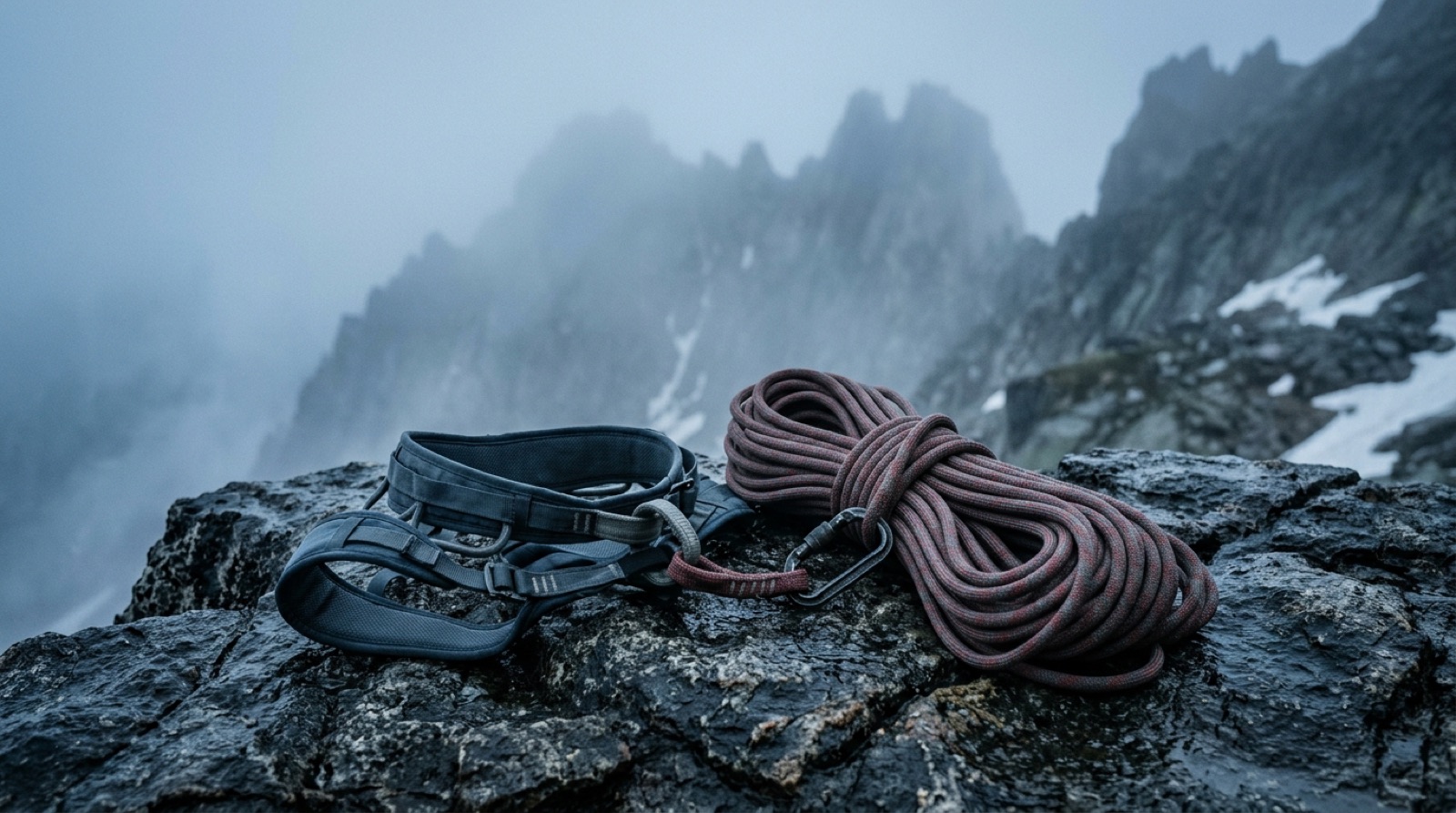
Before the jackets, before the mall stores, before it became a thing people wear to brunch, Arc’teryx made climbing harnesses in North Vancouver.
That order matters more than anything else in this teardown.
The usual disclosure: Arc’teryx is not a Kuipra client. This is an outside teardown of a public brand, built from public reporting and the company’s own account of its history. We’re looking strictly at how the brand was built and marketed.
The facts. The company was founded in North Vancouver in 1989 by Dave Lane, originally under the name Rock Solid, and its first products were climbing gear. Using thermolamination — a heat-laminate construction method — the team built the Vapor harness, which became its most popular early product. In 1991, then-principal Jeremy Guard renamed the company Arc’teryx after Archaeopteryx, among the earliest known birds, to express a vision of evolutionary, disruptive innovation. The later launch of the Alpha SV jacket with GORE-TEX marked the entry into technical apparel.
Harnesses first. Jackets second. Everything else follows from that sequence.
Start where failure is unforgivable
A climbing harness is life-safety equipment. If it fails, the consequence is not a refund request.
This is the most important structural fact about the brand, and it is almost always mis-read as a nice origin story. It is not a story — it is a proof mechanism. In a life-safety category, marketing claims get settled by physics and by users who will find out immediately whether you were telling the truth. You cannot buy your way to a reputation there. You can only earn it, slowly, by not failing.
And credibility earned under those conditions transfers outward. A company trusted by people hanging off granite is automatically plausible when it says a jacket will hold up in weather. The reputation flows downhill from severe stakes to ordinary ones.
It never flows uphill. A brand that starts by selling lifestyle apparel and later announces it is now serious technical equipment has to fight for every inch of that claim, because the original audience never had a way to verify anything.
The transferable version: pick the hardest, highest-consequence version of your work as the place you build your reputation. The complex client, the difficult installation, the emergency case, the regulated category. Then let the easier work inherit that credibility. Most businesses do the reverse — they build on easy volume work and then try to claim expertise upward, which is the slowest possible route.
An abstract name that needs no translation
Herschel took its name from a hamlet in Saskatchewan, and we argued in that teardown that the specificity is exactly what makes it credible.
Arc’teryx went the opposite direction and it also works: an abstract name from a prehistoric bird, plus a fossil-skeleton mark. No place, no founder surname, no descriptive claim.
Both are legitimate, and the choice has consequences worth understanding:
- A specific real origin buys instant credibility and warmth, but ties you to a place and a story. It travels less easily.
- An abstract name carries no built-in meaning, which means you must fill it with product proof — but once filled, it works identically in every market and every language. Nothing needs translating, nothing gets lost, nothing means something awkward somewhere else.
For any business that expects to serve multiple language communities — which in Metro Vancouver is most of them — this trade-off is worth deciding deliberately rather than by accident. The positioning statement guide is where that decision should get written down.
Make one process decision visible
Thermolamination is a manufacturing technique. It is also, in brand terms, a piece of evidence.
Describing yourself as “high quality” is an adjective, and adjectives are free — every competitor has the same ones on their website. Naming a specific, unusual thing you do, that costs you something, and that a competitor could verify, is a different category of claim entirely.
This is one of the cheapest upgrades available to a small business and almost nobody takes it. You already do something particular: a step you don’t skip, a material you overpay for, a check you run that nobody asks about, a guarantee that costs you money. Name it. Explain what it costs you. Explain what it prevents. One concrete, verifiable process detail outperforms a page of adjectives, and it is the kind of content that gets quoted rather than skimmed.
The dilution problem is a success problem
Here is the tension, offered as our observation rather than a company position: when a technical brand becomes fashionable, the core users who built its credibility often feel the meaning thinning out. The thing that signalled competence starts signalling that you can afford it.
This is not a failure. It is what winning looks like, and it arrives for every brand that gets popular enough. But it does have to be managed, because the credibility the mainstream is buying was manufactured by the demanding core — and if that core disengages, the asset erodes quietly over years.
The general rule for any business scaling past its original audience: keep something that only the demanding customer notices. A product tier, a service level, a depth of documentation, a community, a standard you hold that casual customers will never test. That is what keeps the reputation being renewed rather than merely spent.
Three moves you can steal at any size
Choose a harder proving ground. Decide which work builds your reputation, and make sure it is the difficult version — then let everything easier inherit it.
Name one process, not ten adjectives. Pick the specific thing you do that costs you something, and say what it prevents.
Protect the demanding core. As you get more popular, deliberately keep something the most discerning customers can still tell is there.
Arc’teryx did not become a premium brand by describing itself as one. It became one by starting in the place where nobody gets to describe anything — where the product either holds or it doesn’t.
Frequently Asked Questions
How did Arc'teryx get its name?
The company was founded in North Vancouver in 1989 as Rock Solid by Dave Lane, making climbing gear. In 1991 then-principal Jeremy Guard renamed it Arc'teryx after Archaeopteryx, among the earliest known birds, to signal a vision of evolutionary, disruptive innovation in outdoor products. The fossil-skeleton mark follows directly from the name — an abstract identity that needs no translation in any market.
What made Arc'teryx credible before it made jackets?
Climbing harnesses. The company used thermolamination — a heat-laminate construction technique — to build the Vapor harness, which became its most popular early item. Harnesses are life-safety equipment, so performance claims there are settled by physics rather than marketing. That reputation preceded the Alpha SV jacket with GORE-TEX, which marked the move into technical apparel.
What can a small business learn from Arc'teryx?
Choose the hardest, highest-consequence version of your work as the proving ground, and let easier work inherit that reputation rather than the reverse. Make one process decision visible and specific instead of describing yourself with adjectives. And accept that popularity will dilute perceived exclusivity — plan how you will keep serving the demanding core once the mainstream arrives.
Keep reading



Get in touch