A Content Calendar Small Teams Can Actually Sustain
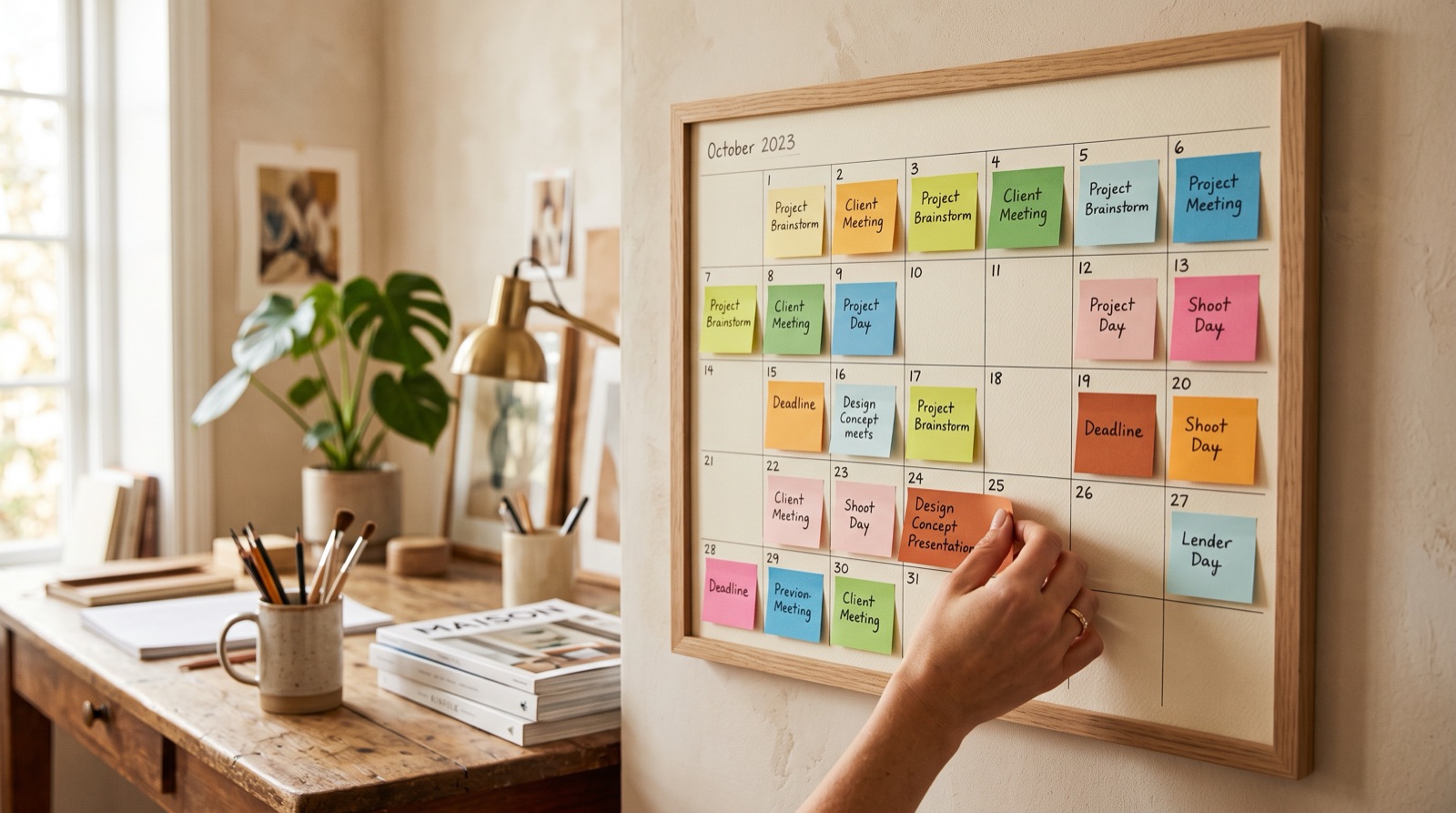
Most content calendars don’t fail because the plan was bad. They fail because the plan was written for a team that doesn’t exist — a content team of five with a videographer on staff, when the reality is one owner and a part-time helper doing content between everything else. Month one runs on adrenaline. Month two, a busy week hits, three posts get skipped, the calendar becomes a record of guilt, and everyone quietly goes back to posting whenever inspiration strikes.
We build calendars differently: start from what a team can actually sustain, and design everything else around that number.
Capacity first, ambition second
Before choosing formats or platforms, answer one question honestly: how many pieces of content can your team produce every week for six months without quality dropping? Not your best week — your worst realistic week, the one with a staff shortage and a supplier problem.
For most small businesses the honest answer is two to four pieces. That’s fine. A calendar that ships three posts a week, every week, will outperform one that plans seven and delivers them only in the weeks nobody was busy. Consistency compounds; heroics don’t.
Whatever your number is, treat it as a budget. Every idea has to fit inside it, which is exactly the constraint that forces better decisions.
Pillars: nothing starts from a blank page
The most expensive moment in content is the blank page. The fix is structural: define three or four recurring content types — pillars — and map each one to a core message of your brand.
Say you run a bakery. Your pillars might be: behind-the-process (craft and quality), staff and regulars (community), product spotlights (what to buy this week), and owner’s notes (the voice and opinions that make you you). Now Tuesday is never “what should we post?” It’s “which pillar is due, and what’s this week’s version of it?”
Pillars only work if they express your positioning — otherwise you’re just producing consistent noise. If your pillars don’t obviously ladder up to a message, the gap is upstream: revisit strategy before tactics, and make sure everything you publish sounds like one brand — that’s what a voice guide is for.
Batch the creation, schedule the distribution
Context-switching, not creation, is what burns small teams out. Making one post from scratch every day means paying the setup cost — clean the counter, good light, find the angle, get in the mindset — five times a week.
So don’t. One planned shoot day per month, built from a shot list your pillars generate almost automatically, can produce the raw photo and video material for four weeks of posts. Write captions in one sitting the following week. Then the daily job shrinks to publishing and replying — minutes, not hours.
The 70/20/10 mix
A useful ratio for filling the calendar without it going stale:
- 70% core value content. The pillar posts that serve your audience and reinforce what you stand for. This is the reliable engine.
- 20% community and engagement. Featuring customers, answering real questions, joining local conversations. Content that talks with people, not at them.
- 10% experiments. A new format, a trend worth testing, a riskier opinion. Small enough that failure costs nothing; real enough that winners can graduate into a pillar.
The ratio is a guide, not a law — but when a calendar dies of boredom, it’s usually because the 10% was the first thing cut.
Plan around real rhythms, not a random grid
Generic calendars fill dates. Useful calendars follow the actual rhythms of your business and your city. When is your busy season, your slow season, your annual restock? And what’s happening in Vancouver — the winter holiday markets, Lunar New Year, cherry blossom season, the summer festival stretch, back-to-school? These moments give content a reason to exist now, which is what makes people stop scrolling.
Map the year’s known moments first, then let the weekly pillars fill in around them.
A week that actually works
In practice, a sustainable week looks something like this: Monday, a pillar post drawn from the batch — usually your strongest value content. Wednesday, a lighter community piece: a customer moment, a question, a reply turned into a post. Friday, either the second pillar in rotation or, one week in four, the experiment slot. Fifteen minutes a day for replies. That’s it — three posts, most of the work already done on batch day, no blank pages anywhere.
Know when to break the calendar
A calendar is a default, not a contract. When something genuinely relevant happens — news your audience is actually talking about, a sudden local moment, a post of yours that unexpectedly takes off — push the scheduled post and respond to the real world. The batch content isn’t perishable; it’ll keep until next week.
The discipline is knowing the difference between a reactive moment worth taking and a shiny distraction. If it touches your positioning and your audience cares about it today, break the calendar. If it’s just noise, the calendar exists precisely to protect you from it.
Want a calendar built around your team’s real capacity — not an imaginary one? Email Charlene and we’ll map it with you.
Frequently Asked Questions
How many posts per week should a small business publish?
As many as you can sustain for six months without quality dropping — for most small teams that is two to four posts a week, not the daily posting the internet tells you to do. A consistent three posts a week beats a heroic month of daily posting followed by silence. Set the number from your real capacity, then protect it.
What is the 70/20/10 content mix?
It is a planning ratio: roughly 70% of your content is core value content that serves your audience and reinforces your positioning, 20% is community and engagement content like replies, features, and local moments, and 10% is experiments. The ratio keeps the calendar useful without making it rigid — the 10% is where new formats earn their place.
What is content batching and why does it matter for small teams?
Batching means producing many pieces of content in one concentrated session — one shoot day can generate a month of photo and video raw material. It matters because context-switching is what exhausts small teams: creating one post from scratch every day costs far more energy than creating twelve in one afternoon. Batch creation, then schedule distribution.
Keep reading



Get in touch