The Three-Phase Event Marketing Framework: Before, During, After
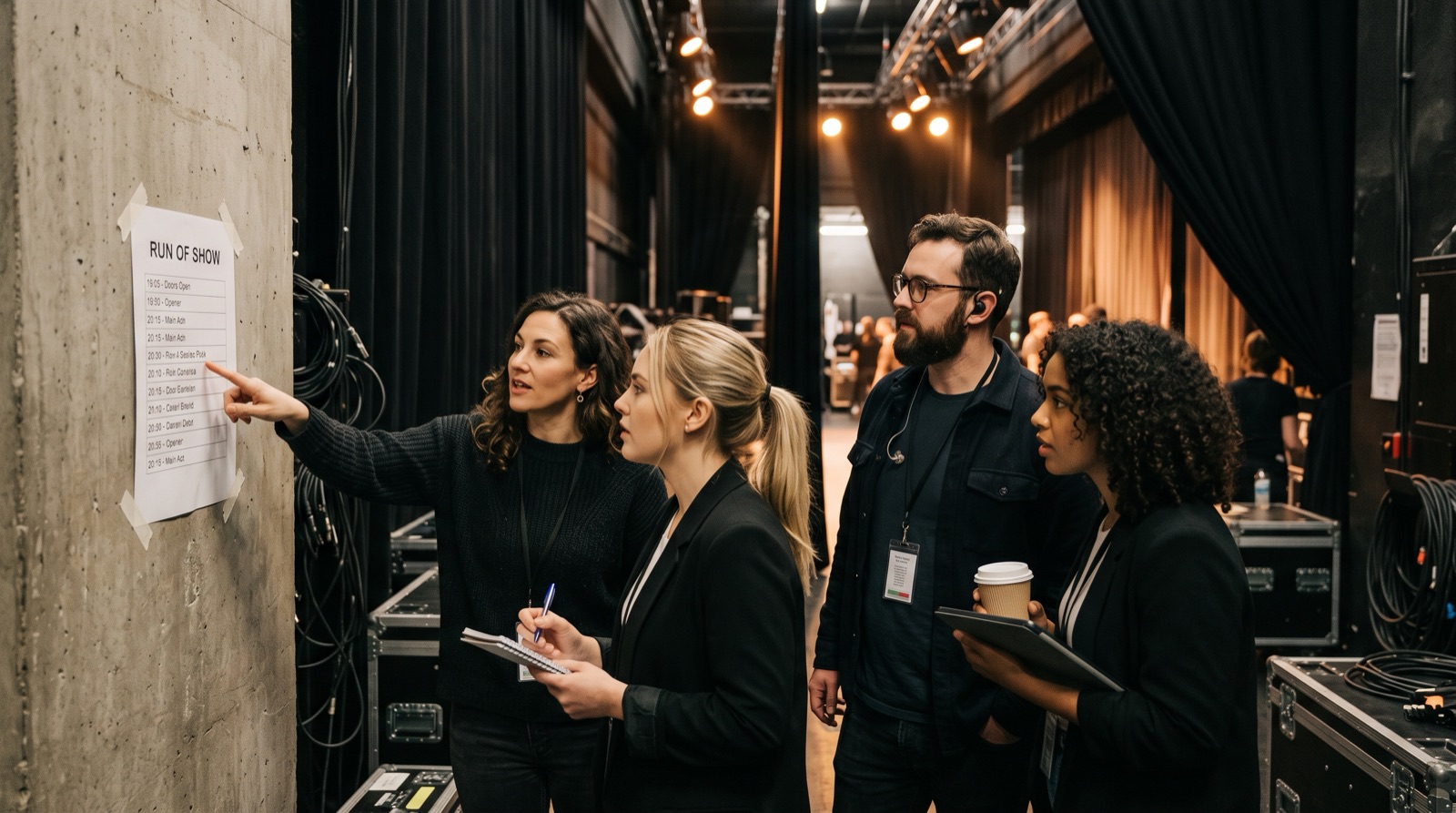
We see it constantly in Vancouver: a business pours weeks of budget and effort into an event — a launch, an open house, a pop-up, an anniversary dinner — and its entire social media footprint is one announcement post and a handful of blurry phone photos posted the morning after.
The event was real. The marketing barely happened.
The fix isn’t spending more. It’s a mental shift: stop treating an event as a date and start treating it as a campaign. A date produces one day of content. A campaign has a before, a during, and an after — which is why the same event, covered properly, generates roughly three times the content surface.
Here’s the three-phase framework we run for our own client events.
Phase 1 — Before: build anticipation, not just awareness
Pre-event content has one job: make cold audiences care before they’ve ever heard of you. An announcement alone doesn’t do that. A sequence does.
The pre-event sequence
- Teasers. Reveal the event in pieces — the venue, the theme, a behind-the-scenes glimpse of preparation. Curiosity outperforms information at this stage.
- Speaker and guest spotlights. Every speaker, performer, or featured guest is a piece of content and a distribution channel. Spotlight them individually, tag them, and most will reshare to their own audience.
- Countdown posts. “Two weeks out,” “three days left” — simple, but they create urgency and give fence-sitters a reason to decide.
- Partner cross-promotion. Sponsors, vendors, and the venue all have audiences that overlap with yours but aren’t identical. Agree on a shared posting schedule so each partner introduces the event to a fresh pool of people.
This phase is where the funnel actually fills. People discovering you through a speaker spotlight or a partner’s story are entering at the top — and by event day, they’re no longer cold.
Phase 2 — During: coverage is a job, not an afterthought
The most common live-coverage failure isn’t lack of effort. It’s improvisation. Someone remembers mid-event to grab their phone, and the results look like it.
Live coverage works when it’s planned like everything else:
- Write a shot list before doors open. Arrivals, setup details, host close-ups, crowd reactions, product moments. If it’s not on the list, it usually doesn’t get shot.
- Assign content roles. One person captures, one person posts. When the same person does both, both suffer.
- Post stories through the day. Real-time stories reward followers who couldn’t attend and signal momentum to everyone watching.
- Bank reel footage for later. Not everything captured today gets posted today. Short vertical clips — energy, laughter, the room filling up — are raw material for Phase 3.
- Hit the peak moments. The ribbon cut, the toast, the reveal. These are scheduled; being ready for them is a choice, not luck.
Phase 3 — After: this is where the compounding happens
Most businesses go silent the day after an event. That silence wastes the phase with the highest return, because post-event content reaches the largest audience: everyone who didn’t attend.
- Recap edits. A 30–60 second cut of the banked footage, published within the first few days while the event is still fresh.
- Attendee-generated content. Reshare what guests posted, with credit. It’s the most credible proof your event was worth attending.
- Highlight narratives over the following weeks. One story per week — a speaker’s best moment, a behind-the-scenes thread, a “what we learned” post. Each one re-exposes the event to people who missed the earlier coverage.
- Warm the audience for the next one. End the cycle with a bridge: “Want in next time?” A well-run Phase 3 is quietly Phase 1 of your next event.
The copy-paste checklist
- Announcement + 2–3 teasers scheduled
- One spotlight post per speaker/guest, with tags
- Countdown posts at 2 weeks, 1 week, 3 days
- Partner cross-promotion schedule agreed
- Shot list written; capture and posting roles assigned
- Stories posted live at peak moments
- Vertical reel footage banked
- Recap edit published within 3 days
- Attendee content reshared with credit
- One highlight post per week for 3–4 weeks
- Bridge post teasing the next event
The takeaway
An event is one of the few marketing investments that naturally produces weeks of authentic content — but only if you plan all three phases before the doors open. And as with everything we do, the phases work best when they express a clear brand position; if that foundation is fuzzy, start with our guide to brand strategy vs. marketing tactics first.
Planning an event and want the coverage to actually work? Email Charlene and we’ll map your three phases together.
Frequently Asked Questions
How far in advance should I start promoting an event on social media?
For most business events, three to four weeks gives you enough runway for teasers, speaker spotlights, and a countdown without exhausting the audience. Larger ticketed events benefit from six to eight weeks. The key is a planned sequence — announcement, spotlights, countdown — rather than repeating the same "join us" post.
What content should I capture during the event itself?
Work from a shot list written before the doors open: arrival and setup moments, speaker or host close-ups, audience reactions, detail shots of the venue and product, and short vertical clips for reels. Assign one person to capture and one to post, so live stories go out during the event while high-quality footage is banked for the recap.
Is it worth posting about an event after it has ended?
Yes — the weeks after an event are often more valuable than the day itself. Recap edits, attendee photos, and highlight stories reach everyone who did not attend and prove social momentum to those considering the next one. A single well-covered event can feed a content calendar for three to four weeks.
Keep reading
Get in touch