Teardown: Purdys Sold Only in Its Own Shops for 118 Years — Then Walked Into a Supermarket
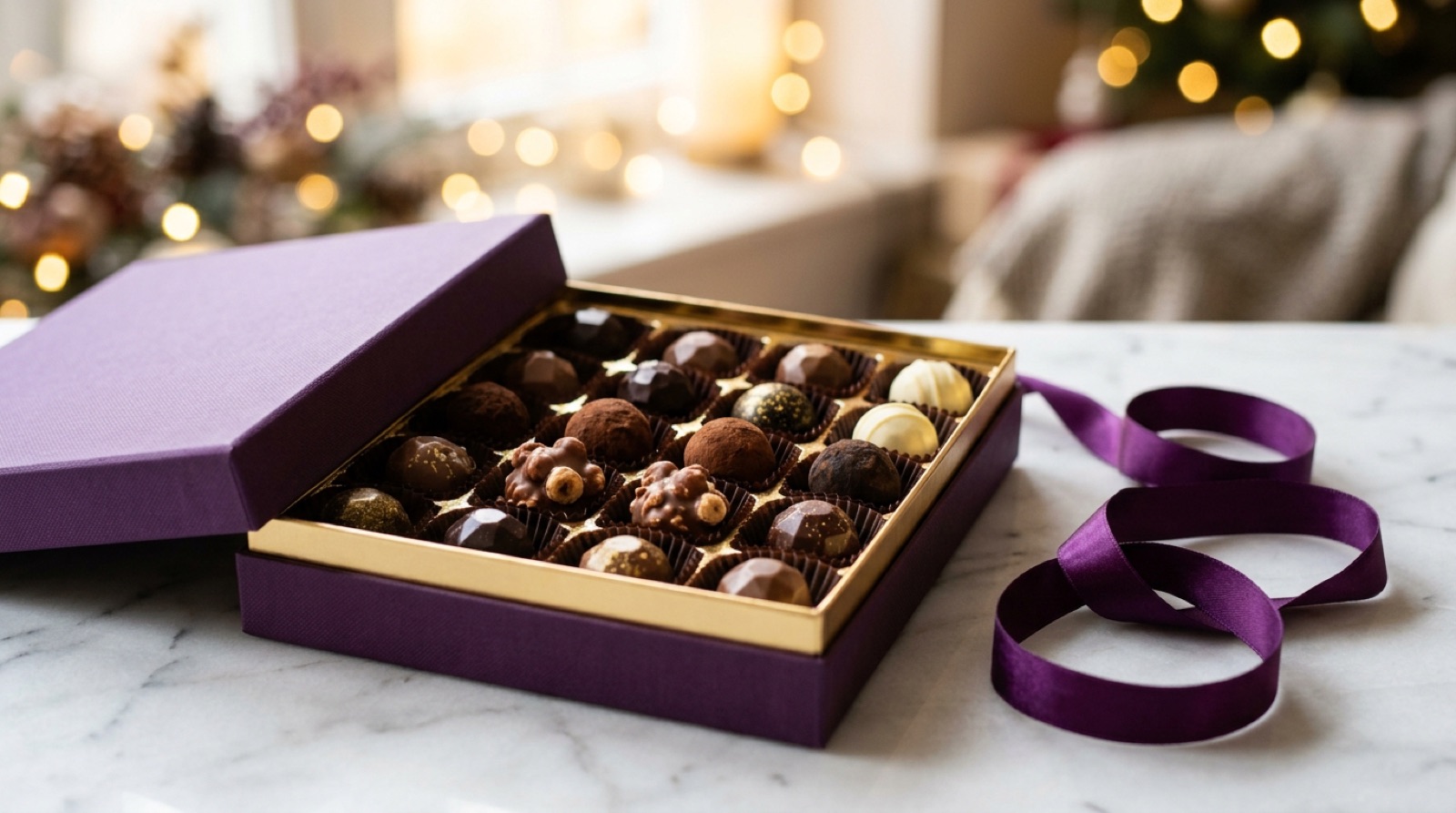
For 118 years, if you wanted Purdys chocolate, you went to a Purdys shop.
Not a grocery aisle. Not a gas station counter. Not a big-box seasonal endcap next to a dozen cheaper boxes. A Purdys shop, with Purdys staff, at Purdys prices. Then in 2025 the company announced it would sell through Save-On-Foods — the first time in its history its products would sit on someone else’s shelf.
That decision is the most interesting thing a Vancouver retail brand has done in years, and it only makes sense once you understand what the previous century of refusing was buying.
The usual disclosure: Purdys is not a Kuipra client. This is an outside teardown of a public brand, built from public reporting and the company’s own account of its history.
The facts. Richard Carmon Purdy started the business in 1907 with a shop on Robson Street. After years under the Forrester family, Charles Flavelle and Eric Wilson bought it in 1963; Karen Flavelle owns it today, with Scott McTavish as CEO. In 1982 the factory and head office moved into a 57,000-square-foot facility at Kingsway and Earles. The chain expanded into Alberta in 1970 and Ontario in 2004 and now runs over 70 stores across five provinces. The Hedgehog — the hazelnut chocolate most people picture when they hear the name — only arrived in the early 1990s.
A century of saying no to distribution
Most consumer brands chase distribution. More shelves, more doors, more places a customer might bump into you. It is the default growth instinct and it usually works.
Purdys did the opposite for over a hundred years, and the refusal bought three things that are very hard to get any other way.
Price integrity. A product that only appears in its own shop never sits next to a discounted competitor. It never gets marked down by a retailer clearing seasonal stock. The customer’s reference price is whatever Purdys says it is, because there is no second number in view.
Presentation control. Chocolate as a gift is not really about chocolate. It is the box, the counter, the ribbon, the moment the staff member asks who it is for. A brand that owns every point of sale owns that ritual end to end.
Meaning. Scarcity of access turns a purchase into an errand you made on purpose — which is exactly what a gift is supposed to signal.
We saw a version of this logic in the Saje teardown, where the store exists because the product must be experienced. For Purdys the store exists because the giving must be experienced. Different reason, same conclusion: the shop is the product.
Seasons are the business model
Gifting brands do not have a sales year. They have a handful of peaks with valleys in between — Christmas, Valentine’s Day, Easter, Mother’s Day, and in Metro Vancouver a set of occasions that matter just as much to a large share of customers.
A business built on peaks lives or dies on preparation. Inventory, staffing, packaging runs, window displays and messaging all have to be decided a full quarter before the rush arrives, because by the time demand shows up it is too late to manufacture anything.
This is our observation rather than a company statement, but it is worth naming for any gifting business here: the calendar that matters locally is wider than the standard retail one. Lunar New Year, Mid-Autumn, Diwali and corporate year-end gifting all create concentrated demand from customers who give generously and notice which businesses showed up for their occasion. We mapped those peaks in the Vancouver seasonal marketing calendar, and the T&T teardown shows what it looks like when a retailer lets festivals reorganize operations instead of decorating them.
A signature can arrive eighty years late
The Hedgehog is the product most people associate with Purdys, and it was introduced in the early 1990s — more than eighty years after the company was founded.
That detail kills a common excuse. Older businesses often assume their recognizable assets were set long ago and all they can do now is protect them. Purdys shows that a heritage brand can still create a new named signature, and that the new signature can become the thing the whole brand is remembered by.
The mechanics match what we found with Peppermint Halo at Saje: a named, specific, repeatable product gives customers something to ask for by name. What Purdys adds is the reassurance that it is never too late to create one.
The name outlived the founders — twice
Purdys has changed hands more than once. It has been owned by the Flavelle family since 1963, now more than sixty years. The name on the shop never changed.
That continuity is its own asset. Customers do not care who owns a chocolate company; they care that the thing they gave their mother thirty years ago is still recognizably the same thing. An owner who understands that keeps the name, the signatures and the rituals intact, and changes the operations underneath.
If you are buying, inheriting or taking over a local business, that is the discipline: identify what customers actually attach to, and treat it as untouchable while you modernize everything else. The rebrand timing guide covers how to tell the difference.
Why break a 118-year rule now
Here is where the Save-On-Foods move gets interesting, and we will frame this carefully as analysis rather than inside knowledge.
Channel exclusivity is an asset you spend. Every year you refuse wider distribution, you forgo sales from customers who would have bought but never passed a Purdys shop. Every year you hold the line, the brand gets stronger and more able to survive the grocery shelf without being dragged down to its price level.
Read that way, the move is not abandoning a principle. It is cashing in a century of brand equity at a moment when the brand is strong enough to sit beside cheaper boxes and still read as the gift.
The risk is the one described above: price comparison, loss of presentation control, and scarcity diluted into convenience. Whether the move pays off depends on execution — how the product is presented, which assortment goes into grocery, and whether the shops remain the place for the full gifting ritual.
The transferable question for any business considering wholesale, marketplaces, delivery apps or retail partners: is your brand strong enough to survive the shelf? If customers already ask for you by name and will pay your price in your own space, a wider channel extends reach. If not, it exposes you to comparison before you have earned the right to win it.
Three moves you can steal at any size
Treat every outlet as a brand decision. Where you sell sets expectations about price and quality. Say no to channels that would teach customers the wrong thing about you.
Plan peaks a quarter early. If your business is seasonal, decide inventory, staffing and messaging for each peak well before demand arrives — including the local occasions your competitors ignore.
Expand distribution from strength. Open new channels when customers already ask for you by name, not when a slow month makes a wholesale order look like rescue.
Purdys did not stay in business for 118 years by being everywhere. It stayed because, for most of that time, it was somewhere specific — and customers made the trip on purpose.
Frequently Asked Questions
Who owns Purdys Chocolatier?
Richard Carmon Purdy founded the company in 1907 with a shop on Robson Street in Vancouver. After the Forrester family's ownership, Charles Flavelle and Eric Wilson acquired it in 1963. Karen Flavelle is the current owner and Scott McTavish serves as CEO. The factory and head office moved to a 57,000-square-foot facility at Kingsway and Earles Street in Vancouver in 1982.
When did Purdys start selling in grocery stores?
In 2025 Purdys announced a retail partnership with Save-On-Foods, the first time the company had sold its products through a separate retailer. Before that, for well over a century, Purdys chocolate was only available through its own shops and its own channels, which currently number over 70 stores across British Columbia, Alberta, Saskatchewan, Manitoba and Ontario.
What can a small business learn from Purdys?
Treat where you sell as part of the brand, not just logistics — every outlet sets expectations about price and quality. Build at least one named signature even if you are decades old; Purdys introduced its Hedgehog line in the early 1990s, more than 80 years after founding. And when you finally expand your distribution, do it from strength and on your terms, not because a bad quarter forced it.
Keep reading


Get in touch