Teardown: Duolingo's Unhinged Social Voice — and When You Should (and Shouldn't) Copy It
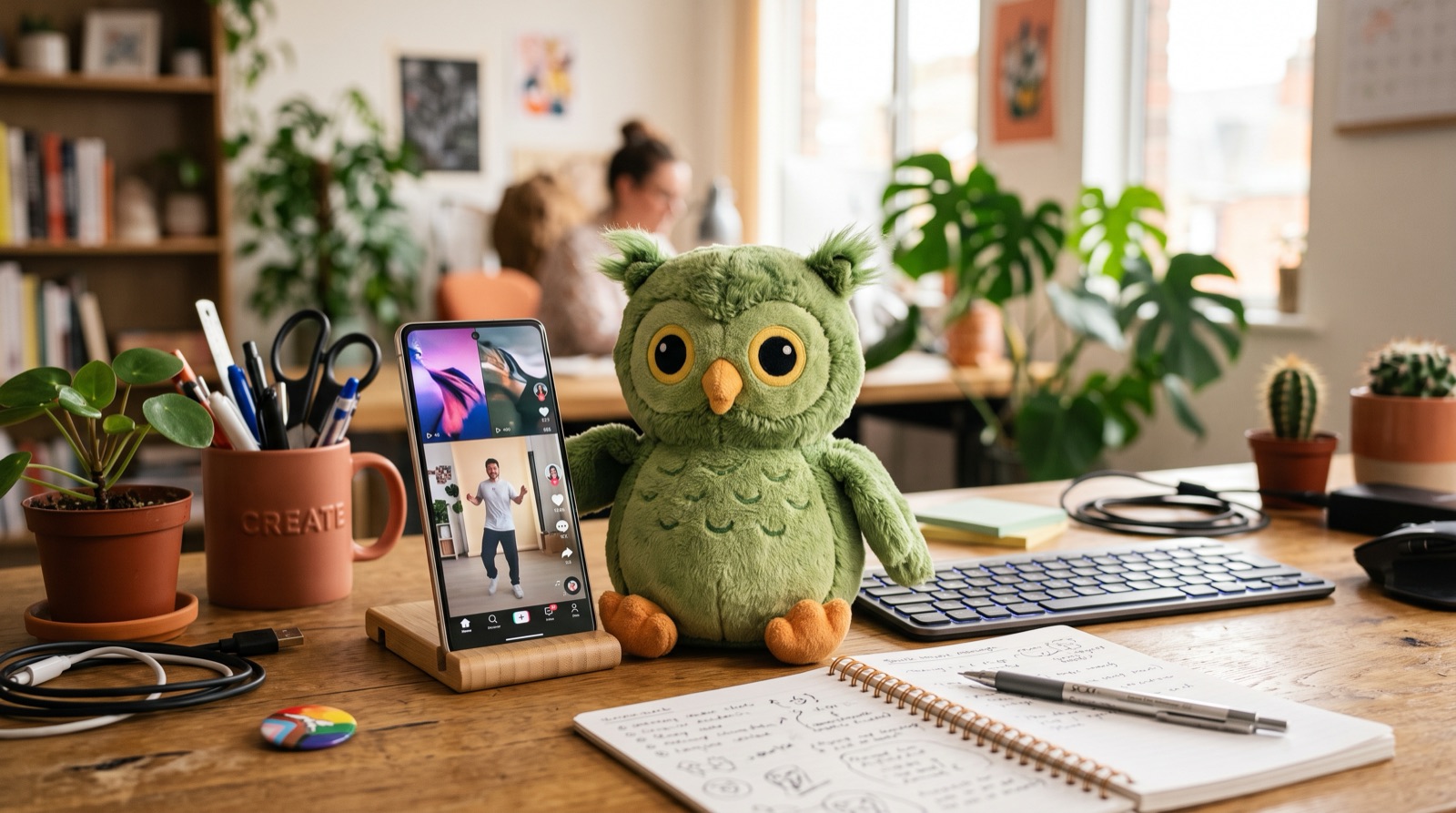
Duolingo is not a Kuipra client — this is an outside teardown based entirely on public information about one of the most imitated brand voices on the internet.
And “imitated” is the operative word. Since Duolingo’s giant green owl started posting chaos on TikTok, roughly half the brands on social media have tried some version of “unhinged.” Most of them faceplant. The interesting question isn’t what Duolingo does — it’s why the copy fails, and what’s actually transferable.
What Duolingo actually built
On the surface: a fuzzy green owl doing deranged things on TikTok. Duo thirsts publicly over Dua Lipa, twerks in the office, and leans hard into the meme audiences invented — the passive-aggressive owl who will find you if you skip your Spanish lesson. The app’s own push notifications became a running joke, and instead of softening the joke, the brand claimed it.
Underneath, three things are doing the real work:
1. A character, not a logo
Duolingo doesn’t post as a company. It posts as Duo — a character with wants (your daily lesson, Dua Lipa’s attention), flaws (obsessive, dramatic, mildly menacing), and relationships (the long-suffering social team he torments). Audiences don’t root for corporations. They root for characters. Every post compounds the same personality, which is why a new viewer understands the bit within two videos.
2. Chaos with a fence around it
The voice reads as unhinged, but watch closely and it’s remarkably consistent: Duo is menacing about lessons, never about people. The jokes punch at the brand itself, not at users. The character is chaotic; the system running the character is disciplined — a defined personality, clear no-go zones, and a recognizable tone whether the post is a trend-jack or a product announcement. That’s a brand voice guide doing its job, the same discipline we walk through in our guide to building a brand voice.
3. Speed, because the team is trusted
Trend-jacking only works within the trend’s lifespan — often 48 hours or less. Duolingo’s social team ships at that speed because they’re empowered to. No five-layer approval chain, no legal review of a TikTok comment. The company accepted a trade: occasional misses in exchange for being present when a moment is actually live.
The 2025 death of Duo: discipline disguised as chaos
The clearest proof this is strategy, not luck: in early 2025, Duolingo announced that Duo had died — and ran it as a coordinated, multi-week narrative arc. Other brand accounts posted condolences, the app’s icon changed, users were told to do lessons in his honor, and the owl was eventually revived. It looked like a fever dream. It was a campaign: planned narrative beats, cross-platform coordination, product tie-ins, and an ending. Random accounts don’t do endings. Writers’ rooms do.
Why the copycats fail
Voice–brand fit. Duolingo sells a free, low-stakes, gamified habit. The worst case of a Duolingo joke landing badly is mild. A bank, a clinic, or a law firm being “unhinged” isn’t charming — it’s a trust withdrawal at the exact moment the customer needs deposits. Your voice must match what your customer needs to feel before buying. Sometimes that feeling is fun. Often it’s safety.
Chaos without character. Most imitators copy the randomness and skip the character work. But randomness is the costume; the character is the engine. Ten “quirky” posts with ten different personalities read as a brand having an identity crisis.
Trend speed without trust. If every post crawls through three approvers, you will always arrive after the trend has died — and late trend-jacking is the most visible form of trying too hard.
What a Vancouver business can actually borrow
- A recognizable character. Not necessarily a mascot — a consistent point of view. The named baker who posts. The strata lawyer with strong opinions about one thing. Faces and personalities compound; logos don’t.
- Personality discipline. Write down what your voice is, and — more important — what it never does. Consistency is what made Duo legible. It’s also what made lululemon’s community playbook work: strategy held steady under tactical pressure.
- Permission to be human. You don’t need to be feral. You need to stop sounding like a press release. Reply like a person, joke at your own expense occasionally, and let whoever runs your accounts respond while the conversation is still alive.
Copy the discipline, not the costume. That’s the whole teardown.
Want help defining a voice your brand can actually sustain? Email Charlene at Kuipra and let’s talk.
Frequently Asked Questions
Why does Duolingo's unhinged social media voice work when other brands fail at it?
Because it isn't actually random — it's a tightly disciplined character performance. Duo the owl has a consistent personality, clear boundaries, and a team empowered to move at trend speed. Brands that copy the chaos without the underlying character system just look like a corporation trying too hard.
Should a professional business like a clinic or financial firm use an unhinged brand voice?
Almost never. Voice has to match what customers need to feel before they buy — and for health, money, or legal services, that feeling is trust and competence, not chaos. Those businesses can still borrow the deeper lessons: a recognizable personality, consistency, and permission to sound human.
What can a small local business actually learn from Duolingo's social media?
Three transferable things: build a recognizable character or point of view instead of posting as a faceless logo, define your personality in writing so it stays consistent across every post, and give whoever runs your accounts real authority to respond quickly. None of that requires being a meme account.
Keep reading



Get in touch