Teardown: Fluevog Turned Its Customers Into Co-Authors
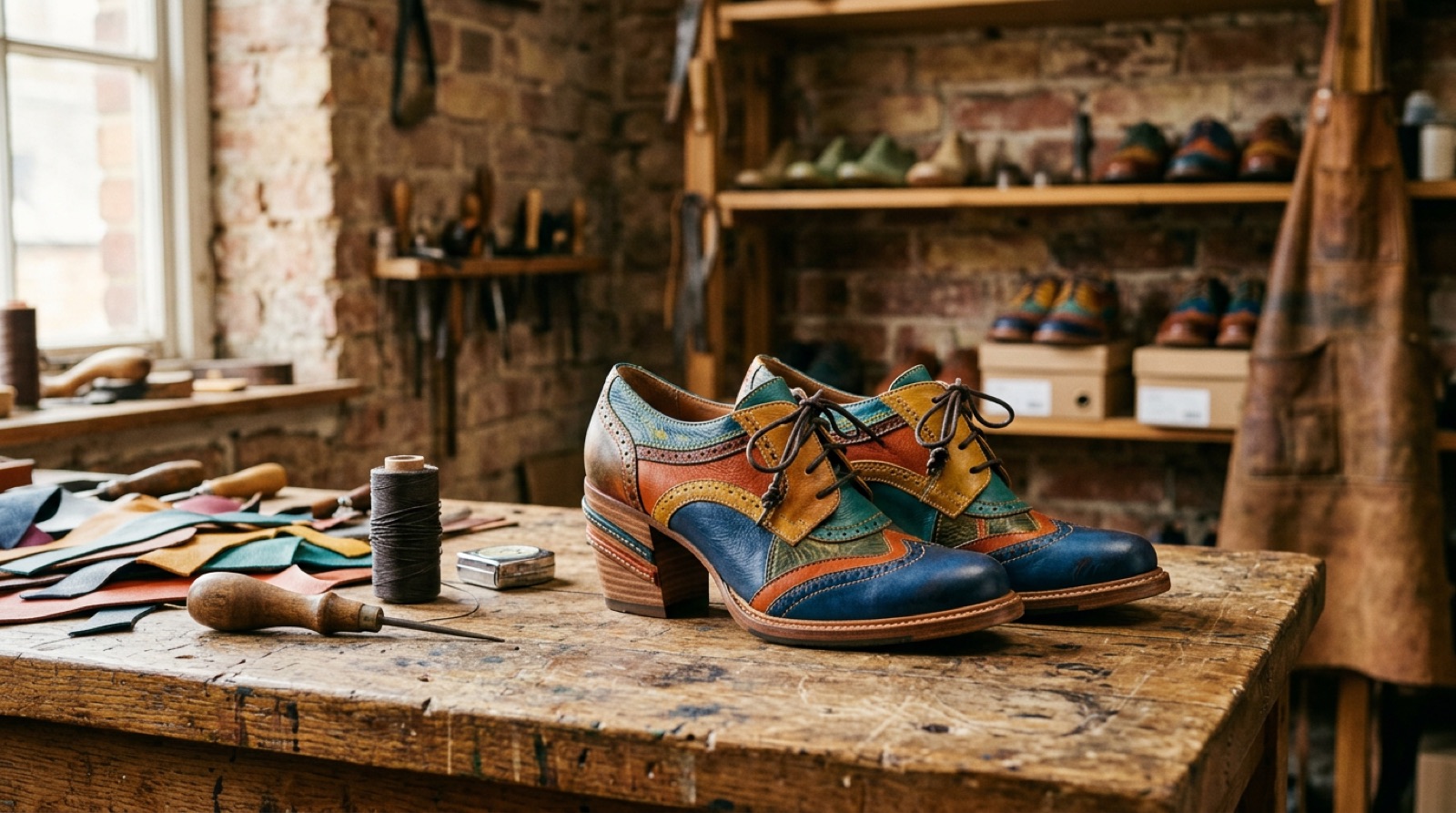
Most brands ask their customers for one thing: money.
Fluevog has spent more than two decades asking them for something else as well. Their ideas, their votes, their evenings, their travel plans. And customers keep saying yes.
That is the part of this Vancouver shoe brand worth studying. Not the shoes themselves, which you either love or find baffling, but the way it turned buyers into participants.
The usual disclosure: Fluevog is not a Kuipra client. This is an outside teardown of a public brand, built from public reporting and the company’s own published history.
The facts. John Fluevog and Peter Fox opened a shoe store in Vancouver’s Gastown in 1970. About a decade later Fluevog bought out his partner, and in 1985, according to the company timeline, he sold his Jaguar to open a second store in Seattle. He told BCBusiness in 2019 that apart from $13,500 in startup capital from his father, he had never had investors; the same piece counted 27 locations across Canada, the U.S., Europe and Australia. The Gastown flagship opened in 2008, in the same neighbourhood as the first shop. By 2018 his son Adrian was chief executive, per The Globe and Mail, and creative direction has since passed to Arabella Barros, who has worked alongside John since 2012.
“I don’t sell a commodity”
In that BCBusiness interview, John Fluevog summed up the strategy in one line: “I’m selling a feeling, an emotion. I don’t sell a commodity.”
Almost every decision makes sense through that sentence. A commodity competes on price and convenience, and on those terms an independent shoe brand loses to the internet every time. A feeling competes on meaning, which the internet cannot undercut.
The clearest example is distribution. In 2018 Adrian Fluevog told The Globe and Mail that “our brand didn’t feel special on Amazon,” and the company cut ties with Amazon and other wholesalers. We looked at a similar instinct in the Purdys teardown, where a century of selling only through its own shops protected price and presentation.
But Fluevog’s more interesting answer is what it built instead of wider distribution: ways for customers to take part.
Role one: customers as designers
In 2002 Fluevog launched Open Source Footwear, which the company’s timeline describes as an effort “to turn shoe-wearers into shoe-designers.” Customers submitted their own designs. If a design was chosen, it was produced and named after its creator, and as the program page puts it, “you got a free pair too.” By 2015, Wikipedia counted fifteen submissions that had been manufactured. The company now writes about the program in the past tense.
Fifteen shoes is not a product strategy. That is the point. The value of the program was never mainly the designs. It was everyone who considered submitting one: studying the brand’s shapes, thinking about what a Fluevog should look like, and imagining their own name on a shoe. People who have done that are not casual buyers anymore.
The small-business version is not hard to picture. A café that puts a regular’s suggested drink on the menu under their name. A bakery that lets its customers pick the next seasonal flavour, then credits them on the chalkboard.
Role two: customers as the ad jury
In 2009 Fluevog took the idea to advertising. Under FluevogCreative, customers made ads for the brand, and according to the company, “Fluevogers voted to determine which ones went to print.”
There is a trade-off. You give up some polish and a lot of control. In exchange, the ads speak in your customers’ own language, and the people who voted on them have a reason to point at them in public and say “I picked that one.”
Role three: customers as a community with somewhere to go
Fluevog gave its fans a name, the “Flummunity,” and then a place to gather. Flummunity Fest started in New Orleans in 2019. For the 2025 edition, the festival page reports that “over 700 Fluevogers joined us,” and the 2026 edition ran in Chicago, New Orleans, Calgary and Montréal. The company also funds an artist grant of $10,000, and its stores host smaller recurring events, from knitting nights in Seattle to “Tea Time with John.”
John Fluevog explained the logic to BCBusiness: stores “need to become a social place where like-minded people get together.” A store that only sells is easy to replace with a website. A store where your people are is not.
We saw the same principle at a much larger scale in the lululemon teardown, where free classes made stores into gathering places. Fluevog’s version is quirkier and smaller, which makes it closer to what a local business can actually copy. If you are planning your own gathering, our event marketing framework covers the before, during and after.
Celebrity moments help too. The Globe and Mail notes fans “from Beyoncé to Jack White.” But celebrity sightings are not what persuades 700 people to travel to a shoe festival. Belonging does.
A voice that refused to change
In the late 1980s, Fluevog introduced its Angel soles, with a line the company timeline still quotes: “Resists alkali, water, acid, fatigue and Satan.” Nearly four decades later, the same line appears in the 2026 relaunch of the Original Angels. The FAQ keeps the joke going. Asked whether the soles really resist Satan, the answer is: “Look around – do you see him? Nope!”
Most businesses tire of their own voice long before customers do, and “refresh” it into something safer. Fluevog’s consistency means a customer reading a product page today hears the same brand that was talking in the late 1980s. That continuity is a large part of why the community feels like a culture rather than a mailing list. If your own voice keeps drifting, our brand voice guide is a practical place to start.
The voice is backed by something practical. The FAQ says “any cobbler should be able to work with Fluevogs” for stitching and resoling, and the company invites customers to bring Angels back to a Fluevog store for repair. A brand that expects you to keep its shoes for years is making a different promise from one that expects you to replace them every season.
The founder question
Personality-led brands carry a risk: what happens when the personality steps back?
Fluevog’s answer has been to move the brand out of one person’s head and into things that last. Adrian as chief executive. Barros on creative. A published timeline, a written voice, and community rituals with their own dates and cities. When John handed over creative direction, the company quoted him: “I have great confidence as I pass the torch on to her.” Whether that confidence holds is for the next decade to show, but the groundwork is visible, and it is groundwork any founder-led local business can lay.
Three moves you can steal at any size
Give customers a role with a visible result. Not “share your feedback,” which disappears into a form. A vote that actually decides something, or a suggestion that ends up on the menu with their name on it.
Name your community and give it a recurring place. A monthly in-store night does more than a single launch party, because people can make it a habit.
Keep your voice longer than feels necessary. You will be bored of it years before your customers are. Consistency is what turns a tone into a culture.
Fluevog did not win by being everywhere or being cheapest. It won by making customers feel they had a hand in the brand, because in many cases they did.
If you want help working out what role your customers could play in your brand, that is the kind of work our brand strategy service does. Or use the form below to tell us about your business.
Frequently Asked Questions
Who founded Fluevog?
John Fluevog opened his first shoe store with Peter Fox in Vancouver's Gastown in 1970. The partnership lasted about a decade before Fluevog bought Fox out, and in 1985 he opened a second store in Seattle. By 2018 his son Adrian was the company's chief executive, according to The Globe and Mail.
What was Fluevog's Open Source Footwear program?
Launched in 2002, it invited customers to submit their own shoe designs. Chosen designs were produced and named after the person who submitted them, and that person received a free pair. Wikipedia counted fifteen manufactured submissions as of 2015. The company now describes the program in the past tense.
Why did Fluevog stop selling on Amazon?
Adrian Fluevog told The Globe and Mail in 2018 that "our brand didn't feel special on Amazon," and the company cut ties with Amazon and other wholesalers. For a brand built on being distinctive, sitting in a marketplace beside endless alternatives undermined the thing customers were paying for.
Keep reading

Get in touch